

How to Measure for Stockings: Accurate Sizing Guide
Did you know that wearing the wrong size compression stockings can reduce their effectiveness by up to 40 percent? Finding the perfect fit does not just improve comfort, it can also make a real difference in your daily health and circulation. With a few simple steps and the right tools, you can take precise measurements that make your compression stockings work exactly as they should.
Table of Contents
- Step 1: Prepare the Necessary Measuring Tools
- Step 2: Position Your Legs Correctly for Measuring
- Step 3: Identify and Measure Key Leg Points
- Step 4: Record and Double-Check Your Measurements
- Step 5: Match Measurements to Stocking Size Charts
Quick Summary
| Key Point | Explanation |
|---|---|
| 1. Use a flexible measuring tape. | Flexible measuring tapes ensure accurate leg measurements by conforming to leg curves, unlike rigid instruments. |
| 2. Stand correctly for measurements. | Position your body straight with feet shoulder-width apart to capture true leg dimensions without distortion. |
| 3. Measure key leg points precisely. | Take circumference measurements at the thigh, calf, and ankle to ensure a proper fit for your compression stockings. |
| 4. Record measurements immediately. | Write down each measurement right after taking it to avoid inaccuracies and ensure clarity for future reference. |
| 5. Match measurements to manufacturer charts. | Carefully compare your measurements against the manufacturer’s size charts for the correct compression stocking size. |
Step 1: Prepare the Necessary Measuring Tools
Getting the right measurements for your compression stockings starts with gathering a few simple tools. You are about to learn how to set yourself up for success with an accurate sizing process.
According to research from medical measurement protocols, a flexible measuring tape is the most critical tool you will need. This special tape allows you to capture precise leg circumference and length measurements that determine your perfect stocking fit. Unlike rigid rulers or metal tape measures, a flexible measuring tape contours smoothly around your leg curves.
Here are the exact tools you will want to have ready:
- A flexible cloth or fabric measuring tape
- A full length mirror (optional but helpful)
- Someone to assist you (recommended but not mandatory)
- Clean socks or bare legs for most accurate measurements
When selecting your measuring tape, look for one that is soft yet sturdy. Fabric measuring tapes used in sewing or tailoring work perfectly. Avoid metal measuring tapes or rulers which cannot wrap around your leg comfortably.
Pro Tip: Ensure your measuring tape is pulled snug but not tight. You want a gentle contact with the skin that captures your true leg shape without creating indentations.
In the next step, you will learn the precise technique for taking measurements that guarantee your compression stockings will fit like a second skin. Getting the preparation right sets the foundation for comfort and therapeutic effectiveness.
Step 2: Position Your Legs Correctly for Measuring
Now that you have your measuring tools ready, positioning your body correctly is crucial for obtaining accurate stocking measurements. Your stance and posture play a significant role in capturing precise leg dimensions.
According to measurement guidelines from maritime research archives, standing straight with feet shoulder-width apart creates the optimal position for taking measurements. This stance helps ensure that you capture your true leg size without distortion.
Here are the key steps to position yourself correctly:
- Stand on a hard surface like tile or wood floor
- Keep your weight evenly distributed between both feet
- Place feet shoulder-width apart
- Stand as straight as possible with relaxed shoulders
- Look straight ahead to maintain natural body alignment
- Wear thin socks or be barefoot to get the most accurate measurements
If possible, use a full length mirror to check your posture.
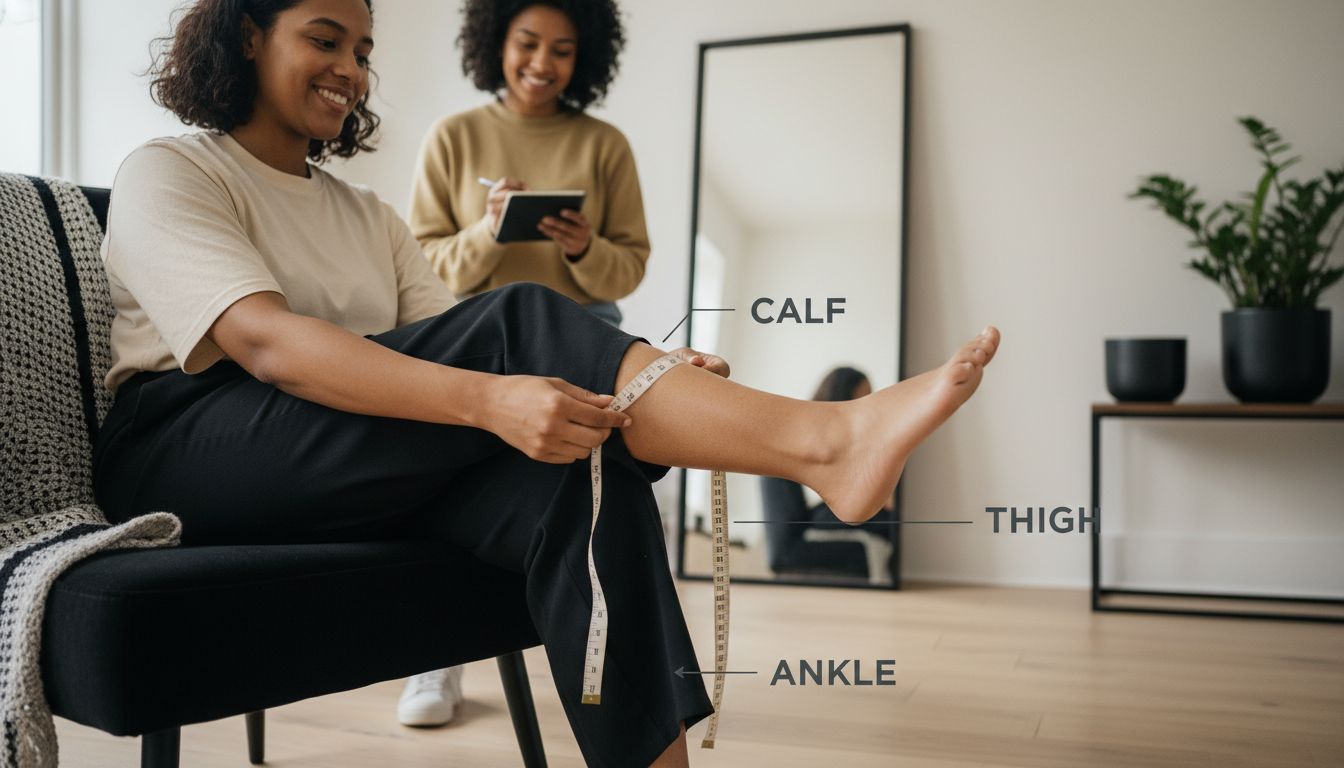 Having a helper can also make this process easier since they can provide feedback on your stance and help take measurements.
Pro Tip: Avoid standing on carpets or uneven surfaces which can alter your natural stance and skew measurement results.
For more detailed guidance on the entire measuring process, check out our step-by-step measuring guide for compression stockings. In the next section, you will learn the specific techniques for taking precise leg circumference and length measurements.
Step 3: Identify and Measure Key Leg Points
Measuring compression stockings requires precision at specific points along your leg. Understanding exactly where and how to take measurements will ensure you get the most comfortable and effective support possible.
According to research from medical measurement protocols, accurate leg measurements involve capturing circumference at three critical points: thigh, calf, and ankle. These measurements determine the right fit for your compression stockings and prevent potential sizing issues.
Here is your systematic approach for identifying and measuring key leg points:
Here’s a summary of the key leg points and how to measure them accurately:
| Leg Point | Measurement Instructions | Notes |
|---|---|---|
| Thigh | Measure widest part of thigh | Tape parallel to ground |
| Calf | Measure fullest part of calf | Maintain gentle, snug contact |
| Ankle | Measure narrowest part above ankle bone | Avoid indenting skin |
| Leg Length | Top of thigh to bottom of foot | Record each leg separately if needed |
- Start at the widest part of your thigh
- Measure around the fullest circumference of your calf
- Capture the narrowest part of your ankle
- Take length measurements from top of thigh to bottom of foot
When measuring circumference, wrap the tape measure smoothly around each point.
Keep the tape parallel to the ground and snug but not tight. You want a gentle contact that reflects your natural leg shape without creating pressure or indentations.
Pro Tip: Always measure both legs if there are variations in size or swelling, as medical compression stockings often need to accommodate individual leg differences.
For those managing specific medical conditions, precision becomes even more critical. Our guide on measuring for compression stockings provides additional insights into tailoring measurements for therapeutic needs. In the next section, you will learn the exact techniques for recording these measurements with absolute accuracy.
Step 4: Record and Double-Check Your Measurements
You have carefully measured your legs now comes the critical step of recording and verifying those measurements. Accuracy here will make the difference between comfortable compression stockings and an uncomfortable fit.
According to maritime measurement guidelines, double-checking your measurements is crucial before finalizing your sizing. Taking a moment to review ensures you capture the most precise dimensions for your compression stockings.
Here is a systematic approach to recording and verifying your measurements:
- Write down each measurement immediately after taking it
- Use a permanent marker or pen for clarity
- Record measurements in inches or centimeters consistently
- Note the measurement point for each recorded number
- Compare left and right leg measurements side by side
- Check for any significant discrepancies between legs
When recording, be as precise as possible. A difference of even a quarter inch can impact the fit and therapeutic effectiveness of your compression stockings. If you notice variations between legs ask your healthcare provider about custom sizing options.
Pro Tip: Take measurements at the same time of day preferably in the morning before any swelling occurs to get the most consistent results.
For detailed guidance on interpreting your measurements, check out our guide on measuring for compression stockings. You are now ready to select the perfect compression stocking that will provide optimal support and comfort.
Step 5: Match Measurements to Stocking Size Charts
With your precise measurements recorded, the next crucial step is translating those numbers into the perfect compression stocking size. This process requires careful comparison and attention to detail to ensure optimal fit and therapeutic effectiveness.
According to medical sizing protocols, matching leg circumference measurements to size charts is a systematic process that guarantees the right level of compression and support. Each manufacturer may have slightly different sizing guidelines, so precision is key.
Here is your strategic approach to matching measurements:
- Locate the manufacturer’s specific size chart
- Compare your thigh circumference measurement first
- Next check your calf circumference measurement
- Verify ankle measurement for complete sizing confirmation
- Always reference both length and circumference measurements
- When measurements fall between sizes choose the larger size
If your measurements do not align perfectly with a single size category consider consulting a healthcare professional. Compression stockings are medical devices and proper fitting is essential for their therapeutic benefits.
Pro Tip: Measure in the morning before any potential swelling occurs to get the most accurate baseline measurements.
For comprehensive guidance on interpreting sizing charts and ensuring the perfect fit, check out our essential tips for compression stockings. You are now prepared to select compression stockings that will provide targeted support and comfort.
Find Your Perfect Fit with Confidence at Fit Stockings
Measuring for compression stockings can feel overwhelming when precise leg measurements like thigh, calf, and ankle circumference matter so much for comfort and effectiveness. If you are dealing with swelling, circulation issues, or medical conditions such as varicose veins or lymphedema, finding the right size becomes crucial. The guide you just read highlights how proper measurements set the foundation for stockings that fit like a second skin and provide therapeutic support without discomfort.
Take control today and explore our wide range of medical-grade compression stockings at Jobst and discover styles tailored to your unique needs like thigh-high or waist-high options available at Waist High (Pantyhose). With free shipping, competitive pricing, and easy returns, we make it simple to get the right fit for your legs. Don’t wait until discomfort grows. Visit Fit Stockings now and take the next step to feel supported and confident in your compression therapy.
Frequently Asked Questions
How do I measure for compression stockings accurately?
To measure for compression stockings accurately, gather a flexible measuring tape and identify key points on your leg: the thigh, calf, and ankle. Measure the circumference at each point, ensuring the tape is snug but not tight, and record your measurements immediately.
What is the proper position for measuring my legs?
Stand straight with your feet shoulder-width apart on a hard surface when measuring your legs. Maintain even weight distribution and relaxed shoulders to capture accurate measurements without distortion.
How do I ensure my measuring tape is used correctly?
Use a flexible cloth measuring tape that contours your leg easily. Wrap it around each measurement point, keeping it parallel to the ground and snug against your skin to get true leg dimensions without indentations.
Should I measure both legs, even if I think they are the same size?
Yes, always measure both legs as sizes can vary due to factors like swelling or different muscle tone. If you find significant discrepancies, consult with a healthcare provider for custom sizing options.
When is the best time of day to take measurements?
The best time to take measurements for compression stockings is in the morning before any swelling occurs. This ensures the measurements reflect your natural leg size at its most consistent.
How do I record my measurements effectively?
Record each measurement immediately after taking it, noting the leg points and using consistent units like inches or centimeters. Check for discrepancies between your left and right leg measurements to catch any potential sizing issues.
Recommended
- Measuring for Compression Stockings: Easy Steps for Better Support in – Fit Stockings
- Putting on Compression Stockings: A Step-by-Step Guide – Fit Stockings
- 7 Essential Tips for Your Compression Stockings Checklist – Fit Stockings
- A Step-by-Step Guide to Measuring for Compression Stockings – Fit Stockings