

How to Maintain Routines for Effective Compression Therapy
Over half of patients prescribed compression therapy struggle to stick with their recommended routine. Finding the right balance between medical needs and daily life can feel tricky, especially when each person’s condition and schedule are unique. By learning how to assess your requirements, set reminders, and track comfort, you can build a more effective, personalized compression therapy routine that supports real results and long-term adherence.
Table of Contents
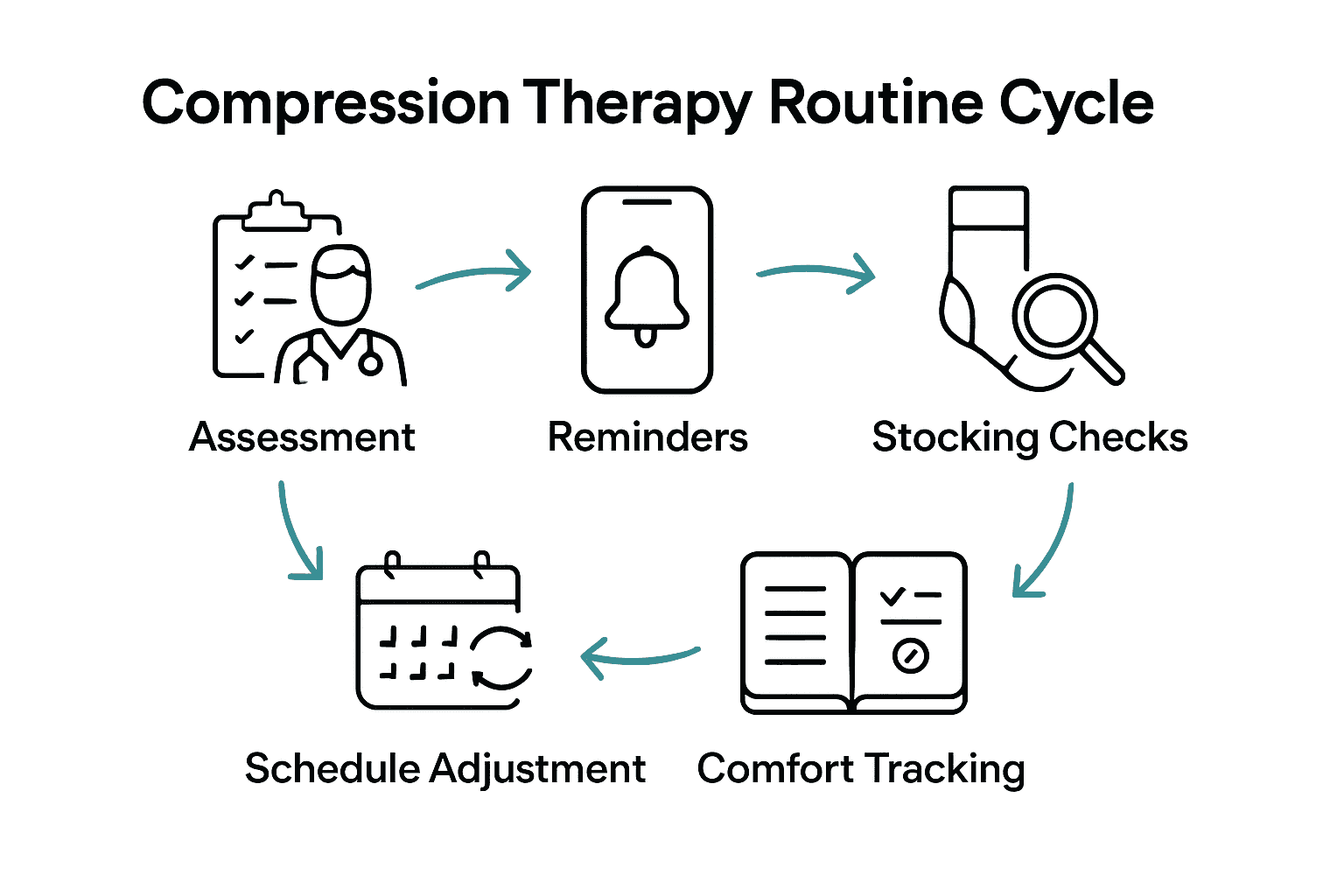
- Step 1: Assess Your Daily Compression Therapy Requirements
- Step 2: Set Up Reminders And Supportive Tools
- Step 3: Incorporate Routine Stocking Checks And Adjustments
- Step 4: Evaluate Your Adherence And Comfort Regularly
- Step 5: Adjust Your Schedule For Long-Term Routine Success
Quick Summary
| Key Point | Explanation |
|---|---|
| 1. Assess individuality in compression needs | Tailor compression therapy to specific health conditions and lifestyle for optimal results. Consult a healthcare professional for guidance. |
| 2. Set up personalized reminder systems | Use digital apps and visual cues to create reminders for your compression therapy schedule, improving adherence significantly. |
| 3. Check and maintain compression stockings regularly | Routinely inspect stockings for wear and tear, replacing them every 3 to 6 months to ensure effective compression. |
| 4. Evaluate comfort and adherence actively | Keep a journal of experiences, noting any discomfort and assessing therapy effectiveness, sharing feedback with your healthcare provider. |
| 5. Adjust schedule for routine integration | Identify daily routine touchpoints for incorporating compression therapy seamlessly, making it a natural part of your care. |
Step 1: Assess your daily compression therapy requirements
Assessing your daily compression therapy requirements is a personalized process that demands careful consideration of your specific health needs and lifestyle. According to a systematic review from mdpi, tailoring compression therapy to individual conditions is crucial for effective treatment.
To accurately assess your daily compression needs, start by evaluating your medical condition and consulting with a healthcare professional. Different conditions require different compression levels and wearing schedules. For instance, patients with varicose veins might need different compression strategies compared to those managing lymphedema. As research from ajhs highlights, personalized assessment plays a significant role in therapy adherence.
Key factors to consider during your assessment include the severity of your condition, daily activity level, mobility, and specific medical recommendations. Track your symptoms, note any discomfort or improvements, and be prepared to adjust your compression therapy routine based on professional guidance. Keep a journal of your experiences to share with your healthcare provider, which can help fine tune your compression strategy for optimal results.
Pro tip: When in doubt, always prioritize professional medical advice over generic recommendations. Your unique health profile will determine the most effective compression therapy approach.
Step 2: Set up reminders and supportive tools
Setting up reminders and supportive tools is critical for maintaining consistent compression therapy. According to research from arxiv, digital systems can play a powerful role in supporting treatment adherence through strategic reminder mechanisms.
To create an effective reminder system, start by leveraging technology and personal organization strategies. Digital calendar apps smartphone alerts and smartwatch notifications can help track your compression therapy schedule. The REMIND randomized clinical trial demonstrated that structured reminder devices significantly improve adherence to medical routines. Consider creating multiple reminder channels multiples ways to prompt yourself such as phone alerts physical sticky notes and shared family calendar reminders.
Your reminder system should be personalized and flexible. Some people prefer visual cues like placing compression stockings near your morning routine items while others respond better to digital alerts. Track which methods work best for you and be willing to adjust your approach. If you struggle with consistent reminders consider asking a family member or caregiver to help you stay on track.
Pro tip: Integrate your compression therapy reminders into existing daily routines to make them feel more natural and less like a medical task. The more seamlessly you can incorporate these reminders the more likely you are to maintain consistent therapy.
Step 3: Incorporate routine stocking checks and adjustments
Routine stocking checks and adjustments are essential for maintaining the effectiveness of your compression therapy. Research from PubMed emphasizes that practitioner recommendations play a crucial role in improving patient compliance with compression stockings.
Develop a consistent routine for inspecting your compression stockings. Check for signs of wear such as thinning fabric stretched elastic or visible damage that could compromise their therapeutic effectiveness. A comprehensive guide on compression stocking care tips can help you understand the nuances of proper maintenance. According to another study from PubMed, regular assessments are particularly important for elderly patients to ensure ongoing therapy effectiveness.
Create a monthly or bi monthly schedule for a thorough stocking evaluation. Look for changes in fit as compression stockings can stretch over time potentially reducing their therapeutic compression level. Pay attention to how the stockings feel during wear noting any areas of discomfort or uneven compression.
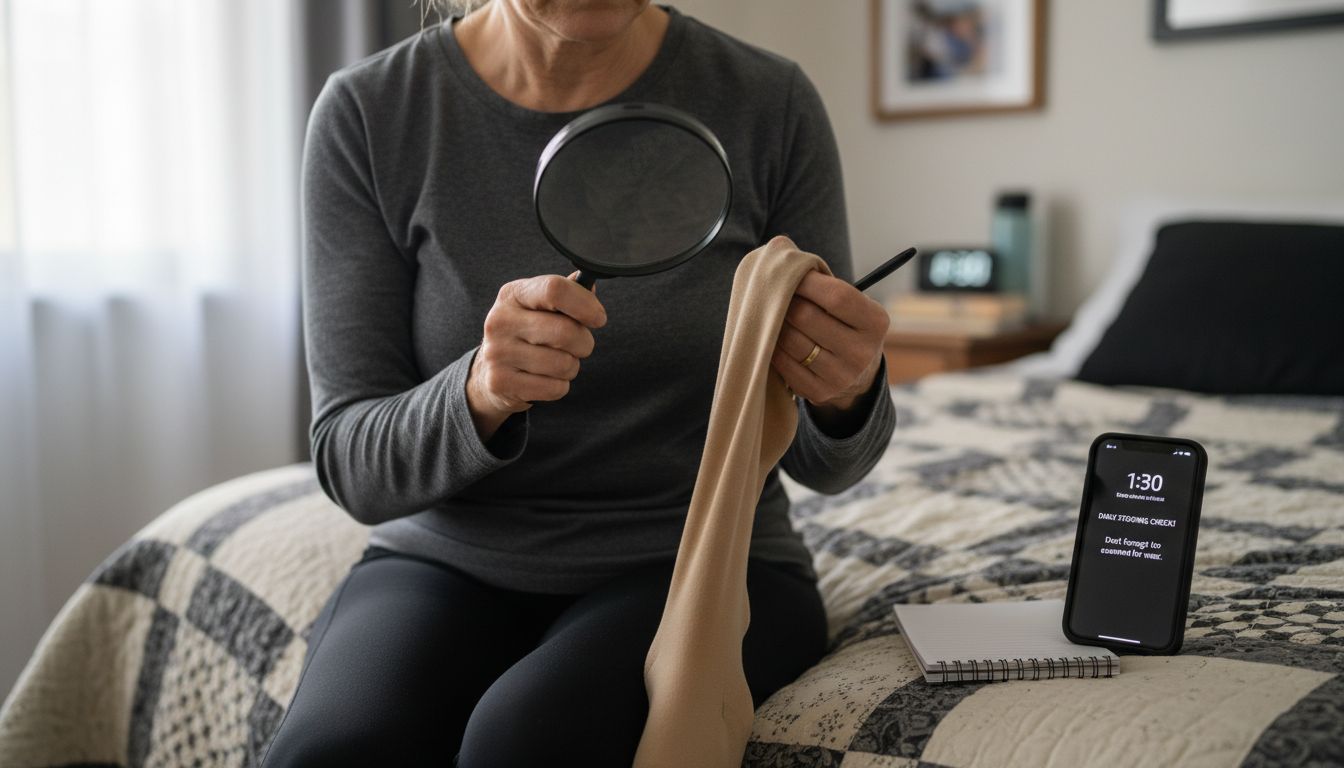 Consider keeping a log to track your observations which can be valuable information to share with your healthcare provider.
Pro tip: Replace your compression stockings every 3 to 6 months or as recommended by the manufacturer. Worn out stockings lose their elasticity and compression properties which can significantly impact their medical effectiveness.
Step 4: Evaluate your adherence and comfort regularly
Regularly evaluating your compression therapy adherence and comfort is crucial for maintaining effective treatment. A study from PubMed highlights the significant impact of educational interventions on patient adherence and preventing venous leg ulcer recurrence.
Develop a systematic approach to tracking your compression therapy experience. Keep a weekly journal documenting how your stockings feel during different activities and times of day. When measuring for compression stockings, pay attention to any changes in fit comfort and skin condition. According to another research study from PubMed, using a multidimensional evaluation tool can significantly improve your adherence and overall therapy effectiveness.
Consider creating a simple checklist to assess your compression therapy experience. Note factors like skin irritation pressure points comfort level during walking or sitting and any changes in symptoms. Schedule quarterly check ins with your healthcare provider to discuss your observations and make necessary adjustments to your compression therapy routine. This proactive approach ensures you receive the maximum therapeutic benefit.
Pro tip: Be honest with yourself and your healthcare provider. Small discomforts or challenges can often be addressed with minor adjustments to your compression therapy approach.
Step 5: Adjust your schedule for long-term routine success
Adjusting your schedule for consistent compression therapy requires strategic planning and behavioral adaptation. Research from BMC Digital Health suggests that digital tools and decision aids can significantly help patients integrate compression therapy into their daily routines.
Start by identifying natural transition points in your existing daily schedule where compression therapy can be seamlessly integrated. Morning routines before work or evening wind down periods are often ideal times for putting on and removing compression stockings. According to research applying behavior change theory from Pure, successful long-term adherence depends on creating consistent and sustainable habits that feel natural rather than disruptive.
Consider using technology and visual cues to support your routine. Set smartphone reminders linked to specific daily activities place your compression stockings near your workout clothes or morning toiletries and create a simple tracking system to monitor your consistency. The goal is to transform compression therapy from a medical task to an integrated part of your personal care routine.
Pro tip: Be flexible and patient with yourself. Routine establishment takes time and small consistent efforts are more sustainable than perfect but unsustainable approaches.
Keep Your Compression Therapy Routine Strong with Fit Stockings
Sticking to a consistent compression therapy routine can be challenging, especially when balancing comfort, fit, and daily reminders. This article highlights key struggles like assessing your unique needs, managing stocking wear and tear, and adjusting your schedule for long-term success. You are not alone in seeking reliable compression solutions that support your health goals while fitting smoothly into your lifestyle.
At Fit Stockings we understand these challenges deeply. Our selection of medical-grade compression stockings offers trusted brands with varying pressures, sizes, and styles designed to meet your exact needs. Whether you need knee-high or thigh-high stockings or help with measuring for the right fit, we provide products and guidance to simplify your routine. Start improving your compression therapy experience today by exploring our collection and making consistent care easier and more comfortable. Don’t wait to take control of your health workflow visit Fit Stockings now to find the perfect solution for your compression therapy needs.
Frequently Asked Questions
How do I assess my daily compression therapy requirements?
Start by evaluating your medical condition, daily activity level, and mobility. Consult with a healthcare professional to determine the appropriate compression levels and wearing schedule for your unique needs.
What are effective ways to set reminders for my compression therapy routine?
Utilize digital calendar apps, smartphone alerts, or visual cues like sticky notes to remind yourself. Choose multiple reminder channels and integrate them into your daily activities to enhance consistency.
How often should I check and adjust my compression stockings?
Conduct routine checks of your compression stockings monthly or bi-monthly to look for signs of wear and ensure proper fit. Maintain a log of your observations to share with your healthcare provider during your check-ins.
Why is it important to evaluate my adherence and comfort regularly?
Regular evaluations help identify discomfort and ensure you are benefiting from the compression therapy. Keep a journal to track your experiences weekly and set quarterly check-ins with your healthcare provider for tailored adjustments.
What steps can I take to adjust my schedule for long-term routine success?
Identify natural transition points in your daily routine, such as morning or evening routines, to integrate your compression therapy seamlessly. Use technology and visual cues to reinforce this new habit, aiming for consistency over perfection.