

Understanding Compression Stockings for Travel and Health
Compression stockings are no longer just something you see in hospitals or on athletes. Air travel, road trips, and even desk jobs can put anyone at risk for circulation issues, but most people still overlook this simple solution. The risk of deep vein thrombosis can increase dramatically on flights over four hours yet a pair of compression stockings can lower that threat and keep you feeling energized. So while those socks may look like standard medical gear, what they actually do for your body during travel is a whole lot more impressive than most expect.
Table of Contents
- What Are Compression Stockings And How Do They Work?
- Why Compression Stockings Matter For Travel Health
- The Benefits Of Wearing Compression Stockings While Traveling
- Key Concepts Of Compression Therapy Explained
- Real-World Applications Of Compression Stockings For Travelers
Quick Summary
| Takeaway | Explanation |
|---|---|
| Compression stockings improve blood circulation. | They apply graduated pressure to legs, promoting efficient blood flow and reducing health risks. |
| Select the right compression level. | Choose 15-20 mmHg for mild issues, 20-30 mmHg for moderate, and 30-40 mmHg for serious conditions. |
| Wear them during long travel periods. | They help prevent deep vein thrombosis and leg swelling during extended immobility, like long flights or road trips. |
| Ideal for individuals with circulatory issues. | Those with pre-existing health conditions benefit significantly from wearing compression stockings while traveling. |
| Consult healthcare professionals for guidance. | Medical advice ensures you choose the appropriate type and level of compression for individual health needs. |
What Are Compression Stockings and How Do They Work?
Compression stockings are specialized medical garments designed to apply graduated pressure to your legs, promoting better blood circulation and reducing potential health risks associated with poor venous return. These therapeutic garments work through a strategic mechanism of consistent, controlled pressure that helps support your body’s natural blood flow processes.
The Science Behind Compression Technology
Compression stockings function by applying precise, graduated pressure from the ankle upward, with pressure decreasing as the stocking moves up the leg. This design mimics the body’s natural blood circulation mechanism. The tightest compression occurs at the ankle, gradually reducing as the stocking moves toward the thigh. This strategic pressure gradient helps push blood upward against gravity, preventing blood pooling and reducing the risk of swelling, varicose veins, and deep vein thrombosis.
The pressure in compression stockings is measured in millimeters of mercury (mmHg), which indicates the level of compression.
The following table summarizes the different compression levels for stockings, their use cases, and the groups who benefit most from each recommendation.
| Compression Level (mmHg) | Use Case | Recommended For |
|---|---|---|
| 15-20 | Mild compression for everyday use | General prevention, light swelling, travelers |
| 20-30 | Moderate support for mild circulatory issues | Individuals with mild varicose veins, travelers at moderate risk |
| 30-40 | Firm compression for significant conditions | Individuals with diagnosed medical needs, post-surgical patients |
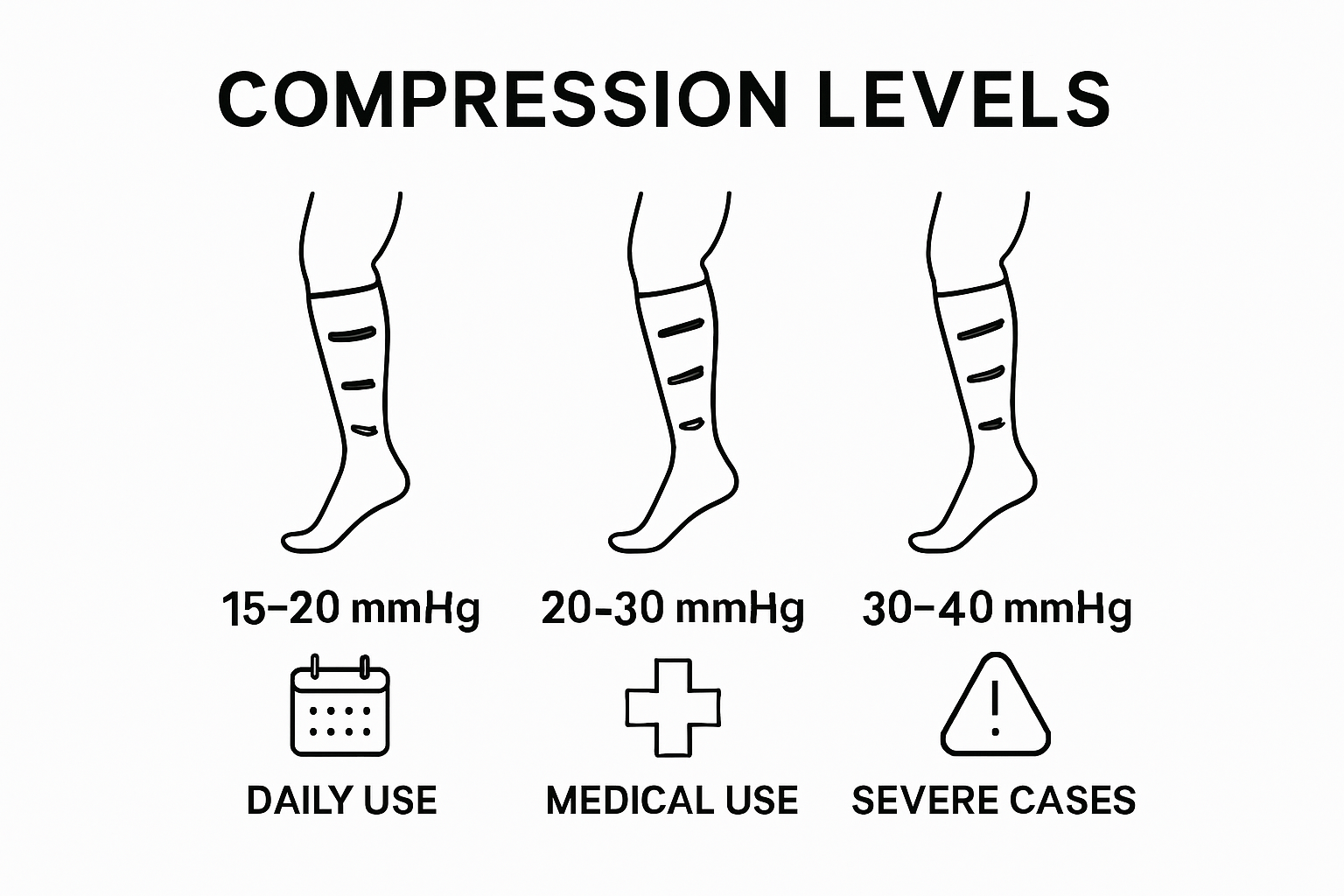 Typical ranges include:
- 15-20 mmHg: Mild compression for everyday wear and light prevention
- 20-30 mmHg: Moderate compression for managing mild circulatory issues
- 30-40 mmHg: Firm compression for significant medical conditions
Practical Applications for Travel and Health
Compression stockings are particularly beneficial during long periods of immobility, such as extended travel or post surgical recovery. Learn more about selecting the right compression level for your specific health needs. By promoting blood circulation, these garments help prevent conditions like deep vein thrombosis (DVT), reduce leg fatigue, and minimize swelling during sedentary activities.
Research from the American Heart Association confirms that compression stockings can significantly reduce the risk of blood clots during extended periods of sitting, making them an essential tool for travelers, athletes, and individuals with circulation challenges.
Why Compression Stockings Matter for Travel Health
Traveling can pose significant health risks to your circulatory system, particularly during long flights, road trips, or extended periods of immobility. Compression stockings serve as a critical preventive measure to protect your legs and overall cardiovascular health during these scenarios.
Hidden Health Risks During Travel
When you remain seated for prolonged periods, blood circulation in your legs becomes compromised. This sedentary state increases your risk of developing serious conditions like deep vein thrombosis (DVT), a potentially life threatening blood clot that can form in the deep veins of your legs. The risk of DVT increases dramatically during long journeys, especially flights lasting more than four hours.
Travel-related circulation challenges include:
- Reduced blood flow due to limited leg movement
- Increased pressure on leg veins from sitting positions
- Potential swelling and discomfort in lower extremities
- Higher likelihood of blood clot formation
Compression Stockings as Travel Protection
Compression stockings for travel act as a proactive health solution by maintaining consistent blood flow and reducing potential circulatory complications. They work by applying graduated pressure that counteracts the negative effects of prolonged sitting, helping prevent blood from pooling in the lower legs.
Research from the Centers for Disease Control and Prevention confirms that certain travelers have an elevated risk of developing blood clots, including individuals over 40, those with recent surgeries, and people with pre existing cardiovascular conditions. Compression stockings provide an additional layer of protection for these high risk groups.
By wearing compression stockings during travel, you can significantly reduce your chances of developing potentially dangerous circulatory issues, ensuring a safer and more comfortable journey.
The Benefits of Wearing Compression Stockings While Traveling
Compression stockings are not just a medical accessory, but a strategic health tool that offers multiple advantages during travel. Beyond preventing serious circulatory complications, these specialized garments provide travelers with comprehensive physiological support and comfort during long journeys.
Enhanced Circulation and Comfort
Travelers experience significant physical stress during extended trips, particularly during long flights or road journeys. Compression stockings counteract the negative effects of prolonged sitting by promoting continuous blood flow and reducing the risk of leg fatigue. By applying graduated pressure from the ankle upward, these stockings help prevent blood from pooling in the lower extremities, which can cause discomfort and swelling.
Key benefits for travelers include:
- Reduced leg swelling and discomfort
- Minimized risk of muscle cramps
- Prevention of leg heaviness and tiredness
- Decreased potential for varicose vein development
Physiological Protection During Extended Travel
Research from the National Institutes of Health demonstrates that compression stockings significantly reduce leg edema and improve overall venous return during prolonged periods of immobility. Travelers with pre existing health conditions find these garments particularly beneficial, as they provide an additional layer of protection against potential circulatory complications.
Explore our travel compression stocking options designed specifically to address the unique challenges faced during different types of travel. Whether you are a frequent flyer, long distance driver, or occasional traveler, compression stockings offer a proactive approach to maintaining leg health and comfort during your journeys.
This table details the main travel scenarios discussed in the article, the circulatory risks they pose, and how compression stockings offer specific protective benefits for each situation.
| Travel Scenario | Circulatory Risk | How Compression Stockings Help |
|---|---|---|
| Long flights (over four hours) | Deep vein thrombosis (DVT), swelling, blood pooling | Promote blood flow, reduce DVT and edema |
| Cross country road trips | Swelling, leg discomfort, blood clots | Minimize swelling, support circulation |
| Business travel (frequent trips) | Repeat strain, risk of chronic issues | Consistent leg support, prevent complications |
| Travelers with pre-existing conditions | Greater risk of blood clots, leg fatigue | Additional protection, medical-grade support |
Key Concepts of Compression Therapy Explained
Compression therapy represents a sophisticated medical intervention designed to support vascular health and manage circulatory challenges. By applying controlled external pressure to the legs, this therapeutic approach addresses multiple physiological mechanisms that impact overall leg wellness and circulation.
The Fundamental Principles of Compression
Compression therapy works by creating graduated pressure that supports the body’s natural blood circulation processes. The pressure is strategically engineered to be strongest at the ankle and gradually decrease as it moves up the leg, mimicking the body’s optimal blood return mechanism. This precise pressure gradient helps counteract gravity, promoting efficient venous return and reducing the strain on the cardiovascular system.
Key therapeutic principles include:
- Enhancing venous blood flow
- Reducing fluid accumulation in tissues
- Supporting muscle and vein function
- Minimizing inflammation and swelling
- Preventing blood pooling in lower extremities
Scientific Foundations of Pressure Management
Learn more about the comprehensive approach to compression therapy and its medical applications. Compression therapy is not a one size fits all solution but a nuanced approach tailored to individual physiological needs.
Research from the National Institutes of Health reveals that compression therapy provides critical support for managing various circulatory conditions. The therapeutic pressure ranges from 15 to 40 mmHg, with medical professionals recommending specific levels based on individual health requirements, underlying conditions, and specific circulatory challenges.
By understanding these fundamental concepts, patients can make informed decisions about integrating compression therapy into their healthcare strategies, ultimately promoting better leg health and overall circulatory wellness.
Real-World Applications of Compression Stockings for Travelers
Compression stockings have emerged as a critical health solution for travelers across various demographics, offering targeted protection and comfort during extended journeys. Their versatility extends beyond medical recommendations, providing practical benefits for different travel scenarios and individual health profiles.
Targeted Protection for Diverse Travel Scenarios
Different travel modes present unique circulatory challenges, and compression stockings offer tailored support for each situation. Long haul flights, extended road trips, and international travel expose travelers to prolonged periods of immobility that can compromise leg circulation. Compression stockings act as a preventive health strategy, mitigating risks associated with sedentary travel conditions.
Ideal scenarios for compression stockings include:
- International flights exceeding four hours
- Cross country road trips
- Business travelers with frequent long distance journeys
- Individuals with pre existing circulatory conditions
- Athletes traveling for competitions
Practical Recommendations for Travelers
Explore our comprehensive travel compression stocking guide to understand how these garments can enhance your travel experience. Selecting the appropriate compression level and style is crucial for maximizing health benefits.
Research from the National Library of Medicine confirms that compression stockings are particularly effective for preventing deep vein thrombosis and reducing leg swelling during prolonged travel. Medical professionals recommend graduated compression levels between 15-30 mmHg for most travelers, with specific recommendations based on individual health profiles and travel duration.
By understanding and implementing compression stocking strategies, travelers can proactively protect their circulatory health, ensuring more comfortable and safer journeys across various transportation modes and travel distances.

Discover Compression Solutions for Safer, Healthier Travel
Worried about leg discomfort, swelling, or serious issues like deep vein thrombosis while traveling? You are not alone. This article explains how poor circulation and long periods of sitting on flights or road trips can quickly turn a routine journey into a health concern. When you do not have the right support, leg fatigue, varicose veins, and other risks become very real. The solution is simple. Medical-grade graduated compression therapy gives your legs the boost they need for smooth blood flow, comfort, and real protection when you travel.
At Fit Stockings, you can shop a selection of trusted Jobst medical-grade stockings designed just for travelers and people managing circulatory challenges. With compression levels from 15-20 mmHg up to 30-40 mmHg and a variety of styles like waist-high pantyhose for all-day support found on our waist high collection, you can match your unique health and travel needs. Act now to choose the right fit before your next trip and enjoy free shipping, competitive pricing, and easy returns. Secure your comfort and health today by visiting Fit Stockings.
Frequently Asked Questions
What are compression stockings, and how do they work?
Compression stockings are specialized garments that apply graduated pressure to the legs, improving blood circulation and reducing the risk of circulatory issues. They help prevent blood pooling and minimize swelling by exerting the most pressure at the ankle and gradually decreasing it as they move up the leg.
How do I choose the right compression level for my needs?
Compression levels are measured in mmHg (millimeters of mercury). For general use, 15-20 mmHg is considered mild compression, while 20-30 mmHg is moderate, suitable for managing mild circulatory issues. For significant medical conditions, 30-40 mmHg is recommended. It’s best to consult a healthcare professional for personalized advice.
Can wearing compression stockings help during travel?
Yes, wearing compression stockings during travel can significantly reduce the risk of deep vein thrombosis (DVT) and leg swelling caused by prolonged sitting. They promote blood circulation, making your travel experience safer and more comfortable, especially on long flights or road trips.
Are there any specific health groups that should use compression stockings?
Certain individuals, such as those over 40, those with recent surgeries, or individuals with pre-existing cardiovascular conditions, should consider wearing compression stockings. They provide additional protection against circulatory complications during extended periods of immobilization.
Recommended
- The Ultimate Guide to Compression Stockings: Comfort, Health, and Styl – Fit Stockings
- Compression Stockings for Travel: Your Secret Weapon Against Swollen L – Fit Stockings
- Compression Stockings Fitting Guide 2025: Find the Perfect Fit – Fit Stockings
- How to Choose Compression Socks: A Helpful Guide for 2025 – Fit Stockings