

Understanding Meditation and Pain Management Techniques

Meditation is gaining serious attention as a tool for managing tough chronic pain. Some studies show it can actually rewire brain regions linked to pain processing, with neuroimaging revealing measurable brain changes after regular meditation. This might sound like wishful thinking compared to powerful medications. Yet, meditation’s true influence is grounded in hard science and is now being recommended in clinical guidelines as a reliable part of pain management strategies.
Table of Contents
- What Is Meditation And Its Role In Pain Management?
- The Connection Between Mind And Body In Pain Perception
- How Meditation Can Alter Pain Responses
- Key Concepts In Integrating Meditation Into Pain Relief
- Real-World Applications Of Meditation For Different Pain Conditions
Quick Summary
| Takeaway | Explanation |
|---|---|
| Meditation aids chronic pain management. | It cultivates focused awareness and promotes non-invasive healing, positively influencing pain experiences. |
| Meditation alters brain’s pain processing. | Regular practice induces neuroplastic changes, reducing pain intensity and enhancing pain tolerance. |
| Personalized meditation enhances effectiveness. | Tailor techniques to individual pain characteristics for better management outcomes. |
| Mind-body connection impacts pain perception. | Mental states significantly shape pain experiences, emphasizing psychological strategies in treatment. |
| Clinical evidence supports meditation use. | Research indicates notable improvements in pain-related function across various conditions when integrating meditation. |
What is Meditation and Its Role in Pain Management?
Meditation represents a powerful mind-body technique that enables individuals to cultivate focused awareness and promote holistic healing, particularly in managing chronic pain conditions. Unlike traditional medical interventions, meditation provides a non-invasive approach to understanding and mitigating pain experiences through mental training and neurological regulation.
Understanding Meditation’s Fundamental Principles
Meditation is a structured mental practice that trains attention and awareness, enabling practitioners to develop a more balanced relationship with physical sensations and emotional responses. At its core, meditation involves deliberately directing consciousness toward specific mental states, often by concentrating on breathing, bodily sensations, or maintaining an open and nonjudgmental awareness.
Key principles of meditation in pain management include:
- Developing metacognitive awareness about pain perception
- Reducing emotional reactivity to painful sensations
- Promoting neuroplastic changes in pain processing regions of the brain
Neurological Mechanisms of Meditation in Pain Perception
According to research from the National Center for Complementary and Integrative Health, meditation influences pain perception through complex neurological mechanisms. Scientific studies demonstrate that consistent meditation practice can alter brain structures associated with pain processing, potentially reducing pain intensity and improving pain tolerance.
By engaging specific neural networks, meditation helps individuals reframe their pain experience, shifting from a reactive and stressful relationship with pain to a more accepting and manageable perspective.
This neurological rewiring can significantly impact how the brain interprets and responds to chronic pain signals, offering a promising complementary approach to traditional pain management strategies.
The transformative potential of meditation extends beyond temporary pain relief, representing a holistic approach to understanding and managing chronic pain conditions through mental discipline and neurological regulation.
This table compares traditional medical pain management approaches with meditation-based approaches, highlighting differences in method, primary goal, and key benefits as noted throughout the article.
| Approach | Method | Primary Goal | Key Benefits |
|---|---|---|---|
| Traditional Medical | Medication, physical treatment | Pain symptom reduction | Fast relief, standardized protocols |
| Meditation-Based | Mental focus, mindfulness practice | Modify pain perception and coping | Non-invasive, promotes neuroplasticity, enhances emotional regulation |
The Connection Between Mind and Body in Pain Perception
Pain perception represents a complex neurological phenomenon that transcends simple physical stimulation, involving intricate interactions between psychological processes and physiological responses. The mind-body connection demonstrates how mental states and emotional experiences can profoundly influence an individual’s pain experience, challenging traditional biomedical models of pain understanding.
Psychological Foundations of Pain Processing
Pain is not merely a direct sensory input but a multidimensional experience shaped by cognitive interpretation, emotional context, and personal history. Neurological research reveals that pain perception occurs through sophisticated neural networks that integrate sensory information with psychological factors such as attention, expectation, and emotional state.
Key psychological influences on pain perception include:
- Cognitive appraisal of pain intensity and threat
- Emotional regulation and stress response
- Prior pain experiences and learned neural responses
Neurobiological Mechanisms of Mind-Body Pain Interaction
According to research from the National Institutes of Health, neuroimaging studies demonstrate that mental training and mindfulness practices can significantly alter pain processing regions in the brain. Functional MRI evidence suggests that psychological interventions can modulate neural activity in areas responsible for pain sensation, emotional interpretation, and cognitive evaluation.
The brain’s remarkable neuroplasticity allows individuals to rewire pain perception pathways, transforming how physical discomfort is experienced and managed. This neurobiological flexibility highlights the profound interconnection between mental states and physiological pain responses, showing that psychological approaches can fundamentally reshape pain experience at the neural level.
Understanding the mind-body connection in pain perception offers a revolutionary approach to pain management, emphasizing the critical role of psychological strategies in comprehensive pain treatment and holistic health care.
The following table summarizes key psychological and neurobiological factors that influence pain perception, as described in the mind-body connection section.
| Factor | Description |
|---|---|
| Cognitive appraisal | Personal interpretation of pain and its perceived threat |
| Emotional regulation | Ability to control emotional reactions to pain |
| Prior pain experiences | Learned neural responses based on pain history |
| Neural activity modulation | Changes in brain regions responsible for pain sensation |
| Neuroplasticity | Brain’s capacity to rewire pain processing pathways |
| Mindfulness training impact | Use of meditation to alter pain evaluation and response |
How Meditation Can Alter Pain Responses
Meditation represents a sophisticated neurological intervention that fundamentally transforms how the brain processes and experiences pain, offering a powerful alternative to traditional pharmaceutical approaches. By engaging specific neural networks, meditation enables practitioners to modify pain perception at both psychological and physiological levels.
Neural Recalibration of Pain Signals
Meditation works by systematically retraining the brain’s pain processing mechanisms, creating a more adaptive and less reactive response to painful stimuli. This neural recalibration occurs through targeted mental practices that modify brain connectivity, attention allocation, and emotional interpretation of sensory experiences.
Key mechanisms of pain response modification include:
- Reducing neural hyperactivity in pain perception regions
- Enhancing emotional regulation during painful experiences
- Developing metacognitive awareness about pain sensations
Neuroplastic Changes in Pain Processing
According to research from the National Institutes of Health, advanced neuroimaging studies reveal that consistent meditation practice can produce measurable changes in brain regions responsible for pain processing. These neuroplastic modifications allow practitioners to experience pain differently, often reducing its intensity and emotional impact.
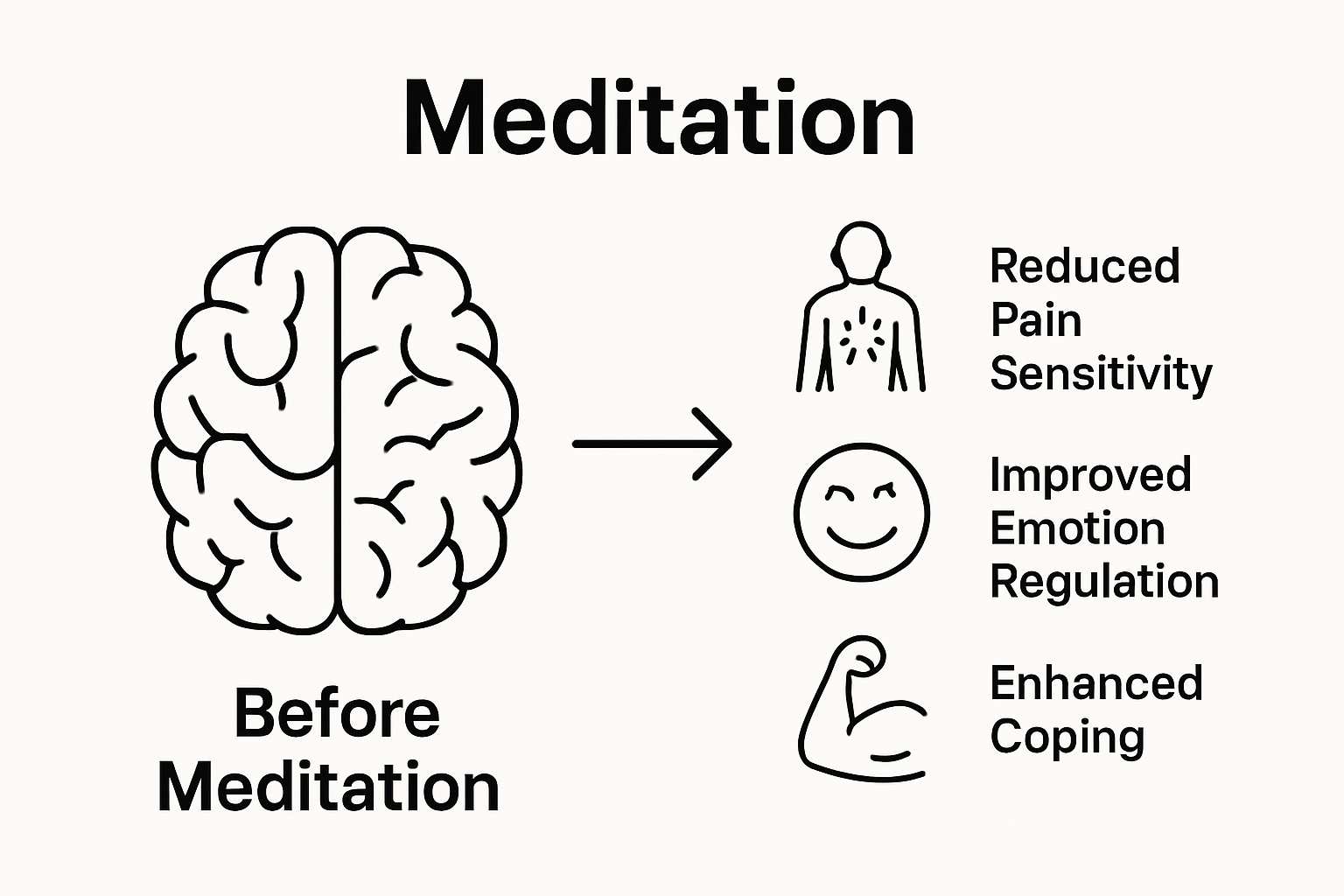
The brain’s remarkable capacity for rewiring enables meditation to create alternative neural pathways that interrupt traditional pain signaling. By systematically practicing mindfulness and focused awareness, individuals can develop more resilient and adaptive pain response mechanisms that significantly diminish suffering and improve overall pain management strategies.
Meditation’s ability to alter pain responses represents a groundbreaking approach to understanding and managing chronic pain, offering hope for individuals seeking holistic and non-pharmacological treatment options.
Key Concepts in Integrating Meditation into Pain Relief
Integrating meditation into comprehensive pain management requires a strategic approach that combines scientific understanding with practical implementation. This holistic method recognizes meditation not as a standalone treatment but as a powerful complementary intervention that can significantly enhance overall pain relief strategies.
Foundational Principles of Meditation Integration
Successful meditation integration into pain management demands a nuanced understanding of individual pain experiences and personalized mental health approaches. Healthcare practitioners and patients must collaborate to develop tailored meditation strategies that address specific pain conditions and psychological responses.
Critical considerations for effective meditation integration include:
- Matching meditation techniques to specific pain characteristics
- Establishing realistic expectations about pain reduction
- Creating consistent practice routines
Clinical Approaches to Meditation-Based Pain Management
According to research from the CDC’s clinical guidelines, meditation represents a recommended nonpharmacological approach for managing subacute and chronic pain. Clinical integration involves systematic assessment, targeted intervention, and ongoing evaluation of meditation’s effectiveness for individual patients.
Healthcare professionals can enhance pain management by incorporating meditation through structured programs that teach patients practical techniques for mental regulation and sensory processing. Learn more about stress relief techniques that complement meditation practices and support overall pain management goals.
The transformative potential of meditation in pain relief extends beyond symptom management, offering patients a proactive approach to understanding and mitigating chronic pain experiences through comprehensive mind-body interventions.
Real-World Applications of Meditation for Different Pain Conditions
Meditation demonstrates remarkable versatility in addressing pain across diverse medical conditions, offering a flexible therapeutic approach that adapts to individual physiological and psychological needs. By understanding how meditation techniques can be tailored to specific pain experiences, patients and healthcare providers can develop more comprehensive and personalized pain management strategies.
Targeted Meditation Approaches for Chronic Pain
Different pain conditions require nuanced meditation techniques that address unique neurological and emotional challenges. Practitioners can modify meditation practices to target specific pain characteristics, creating customized interventions that address both physical sensations and psychological responses associated with chronic pain.
Key considerations for condition-specific meditation applications include:
- Identifying pain type and underlying neurological mechanisms
- Selecting appropriate meditation techniques
- Adjusting practice intensity and duration based on individual tolerance
Clinical Evidence in Pain Management
According to research from the Veterans Affairs clinical trials, meditation interventions have demonstrated significant potential across multiple pain conditions. Large-scale studies reveal that tailored meditation approaches can produce meaningful improvements in pain-related function, providing empirical support for its integration into comprehensive treatment plans.
Clinical applications span various pain conditions, including chronic musculoskeletal pain, migraine disorders, fibromyalgia, and post-surgical recovery. By systematically practicing meditation, patients can develop enhanced pain coping mechanisms, reduce pain intensity, and improve overall quality of life.

The evolving landscape of pain management increasingly recognizes meditation as a powerful, adaptable intervention that offers patients a proactive approach to understanding and mitigating complex pain experiences.
Take Control of Pain With Real Mind-Body Solutions and Compression Therapy
Understanding how meditation changes your pain response shows how important it is to use all the right tools when managing daily challenges from conditions like chronic pain, swelling, and circulation problems. Many people who struggle with discomfort from varicose veins, lymphedema, or diabetes want more than just knowledge—they need everyday support that actually helps them live better. By learning about meditation’s impact on pain signals and emotional well-being, you are already taking the first step toward feeling empowered in your journey to relief.
Give yourself an even stronger advantage by pairing mindful practices with proven physical support. Quality compression stockings can help manage swelling, boost circulation, and provide soothing comfort for your legs, making it much easier to stay active and positive as you focus on healing. Explore the educational resources on our blog or get clear guidance on finding the right fit with our detailed sizing support. Visit Fit Stockings now to start building a holistic pain management strategy that works inside and out.
Frequently Asked Questions
What is meditation and how does it help with pain management?
Meditation is a mind-body technique that cultivates focused awareness and can help manage chronic pain by promoting relaxation, reducing emotional reactivity, and altering pain perception through neurological regulation.
How does meditation influence pain perception in the brain?
Meditation can change brain structures related to pain processing. It influences how the brain interprets and responds to pain signals, potentially reducing pain intensity and improving tolerance to discomfort.
What are the benefits of integrating meditation into pain management strategies?
Integrating meditation into pain management can provide a holistic approach to treat chronic pain, enhancing mental resilience, emotional regulation, and promoting neuroplasticity in pain processing pathways.
Can meditation be effective for specific pain conditions?
Yes, meditation is adaptable and can be effective for various pain conditions, including chronic musculoskeletal pain, migraines, and fibromyalgia. Tailored meditation practices can address the unique neurological and emotional challenges associated with each condition.