

Understanding Compression Stockings While Flying
Compression stockings look just like regular socks to most people, but their impact goes way beyond everyday wear. In fact, clinical studies show they can cut the risk of deep vein thrombosis by up to 80 percent on long flights. It sounds like magic for travelers, but doctors also recommend them for a surprising range of conditions you might never expect.
Table of Contents
- What Are Compression Stockings And Their Purpose?
- Why Compression Matters While Flying
- How Compression Stockings Support Circulation
- Key Features Of Effective Compression Stockings
- Real-World Benefits Of Using Compression Stockings During Flights
Quick Summary
| Takeaway | Explanation |
|---|---|
| Compression stockings improve blood circulation | These specialized garments apply graduated pressure to support vascular function and promote efficient blood flow. |
| Essential for long flights and immobility | They prevent blood clots and discomfort, making them critical for travelers on extended journeys. |
| Choose the right compression level | Compression stockings range from mild to medical-grade; select based on personal health needs and comfort. |
| High-quality materials enhance effectiveness | Look for elasticity, breathability, and durability to ensure optimal support and comfort during wear. |
| Prevents serious health risks | Regular use during air travel mitigates risks like deep vein thrombosis and improves overall leg health. |
What are Compression Stockings and Their Purpose?
Compression stockings are specialized therapeutic garments designed to improve blood circulation and provide targeted pressure support to the legs. Unlike regular socks, these medical-grade garments apply graduated pressure from the ankle upward, helping blood flow more efficiently against gravity and reducing potential health risks associated with poor circulation.
The Science Behind Compression Technology
The fundamental principle of compression stockings involves applying strategic pressure that helps support vascular function. According to the NHS, these garments work by compressing surface veins, arteries, and muscles, which encourages blood to move more effectively through the circulatory system. This compression helps prevent blood from pooling in the lower extremities, reducing the risk of conditions like deep vein thrombosis (DVT) and managing symptoms of varicose veins.
Key characteristics of compression stockings include:
- Graduated pressure design, typically tighter at the ankle and gradually less constrictive toward the thigh
- Available in multiple compression levels measured in millimeters of mercury (mmHg)
- Constructed from elastic, breathable materials that provide consistent pressure
Medical and Travel Applications
While compression stockings have numerous medical applications, they are particularly beneficial during extended periods of immobility, such as long flights or extended travel. For individuals at risk of circulatory issues, these garments offer a proactive approach to maintaining healthy blood flow. Check out our comprehensive guide on compression stockings for travel to understand how these specialized garments can support your health during journeys.
Compression levels are typically categorized based on medical needs, ranging from mild (15-20 mmHg) for general wellness to medical-grade (30-40 mmHg) for more serious circulatory conditions.
To help clarify the different compression levels and their corresponding uses, the following table summarizes the main categories discussed in the article.
| Compression Level (mmHg) | Intended Use | Who Should Use |
|---|---|---|
| 8-15 (Mild) | Preventive care, general wellness | Healthy travelers, those wanting light support |
| 15-20 (Moderate) | Basic travel protection, mild issues | Most travelers, mild swelling or minor discomfort |
| 20-30 (Firm) | Circulatory problems, moderate risk | Those with varicose veins, higher risk of DVT, some medical |
| 30-40 (Medical-grade) | Serious circulatory conditions | Individuals with diagnosed conditions, by doctor advice |
Choosing the right compression stocking depends on individual health requirements, personal comfort, and specific medical recommendations.
Why Compression Matters While Flying
Flying presents unique challenges for blood circulation, making compression stockings an essential travel companion for maintaining vascular health. Extended periods of sitting in confined airplane spaces create significant risks for blood flow disruption, potentially leading to serious medical complications.
The Hidden Risks of Air Travel
Research from the National Center for Biotechnology Information highlights that prolonged immobility during flights dramatically increases the risk of developing deep vein thrombosis (DVT). The combination of reduced cabin pressure, limited movement, and cramped seating environments creates a perfect storm for potential circulatory problems.
Key risks associated with long flights include:
- Reduced blood circulation due to extended periods of sitting
- Increased potential for blood clot formation
- Potential swelling and discomfort in lower extremities
- Higher vulnerability for individuals with pre-existing circulatory conditions
How Compression Stockings Provide Protection
Compression stockings serve as a critical preventive measure during air travel by actively supporting blood circulation. They apply graduated pressure that counteracts the natural gravitational challenges of sitting for extended periods. Explore our comprehensive guide on compression stockings for travel to understand how these garments can transform your travel experience.
By promoting consistent blood flow from the lower legs back to the heart, compression stockings help mitigate the risks associated with prolonged immobility. They are particularly beneficial for travelers with existing health conditions, those with a history of blood clots, pregnant women, and individuals with limited mobility. The strategic pressure gradient helps prevent blood from pooling in the lower extremities, reducing the likelihood of dangerous circulatory complications during your journey.
How Compression Stockings Support Circulation
Compression stockings represent a sophisticated approach to improving blood circulation through strategic mechanical design. By applying calculated pressure across different body regions, these garments create a unique physiological response that actively supports vascular health and prevents potential circulatory complications.
The Biomechanics of Graduated Compression
Research published in the Journal of Vascular Surgery30155-7/fulltext) explains that compression stockings work by creating a pressure gradient that assists the body’s natural venous return mechanism. The graduated compression design means the pressure is strongest at the ankle and gradually reduces as it moves up the leg, which mimics the body’s natural blood flow dynamics.
Key mechanisms of circulation support include:
- Reducing venous diameter to increase blood velocity
- Counteracting gravitational blood pooling
- Enhancing lymphatic drainage
- Minimizing potential inflammation and swelling
Physiological Impact on Blood Flow
The pressure applied by compression stockings creates a mechanical assist to the cardiovascular system.
By gently squeezing the leg muscles and surrounding blood vessels, these garments help push deoxygenated blood back toward the heart more efficiently. Learn more about our specialized compression levels to understand how different pressure intensities can address specific circulatory needs.
Compression stockings essentially function as an external muscle support system, helping veins overcome the challenges of gravity and reduced mobility. For individuals with compromised circulation or those experiencing extended periods of inactivity, these garments provide a proactive solution to maintaining healthy blood flow. The continuous, gentle pressure helps prevent blood from stagnating in the lower extremities, reducing risks of conditions like deep vein thrombosis and chronic venous insufficiency.
Key Features of Effective Compression Stockings
Selecting the right compression stockings involves understanding their critical design elements and technical specifications. Not all compression garments are created equal, and recognizing the key features can significantly impact their effectiveness and comfort during use.
To aid in choosing effective compression stockings, this table outlines the key design features and material qualities to look for as highlighted in the article.
| Key Feature | Description |
|---|---|
| Graduated Compression | Tighter at the ankle, reducing pressure up the leg |
| Elasticity & Shape Retention | Maintains fit and support during long wear |
| Breathable, Moisture-Wicking | Helps keep legs dry and comfortable |
| Reinforced Heel & Toe | Adds durability in high-stress areas |
| Seamless Design | Prevents rubbing and skin irritation |
Material and Construction Quality
According to Medical News Today, effective compression stockings require specific material properties and construction techniques that support optimal circulation. The ideal compression stocking combines advanced fabric technologies with precise engineering to deliver consistent pressure and durability.
Key quality indicators include:
- High elasticity with shape retention capabilities
- Moisture-wicking and breathable fabric composition
- Reinforced heel and toe areas for enhanced durability
- Seamless design to prevent skin irritation
Compression Levels and Medical Precision
Compression stockings are categorized by their pressure gradient, measured in millimeters of mercury (mmHg). These pressure levels determine their specific medical and therapeutic applications. Discover stylish compression solutions that don’t compromise on functionality for those seeking both medical support and aesthetic appeal.
Compression levels range from mild (8-15 mmHg) to medical-grade (30-40 mmHg), with each level targeting different circulatory needs.
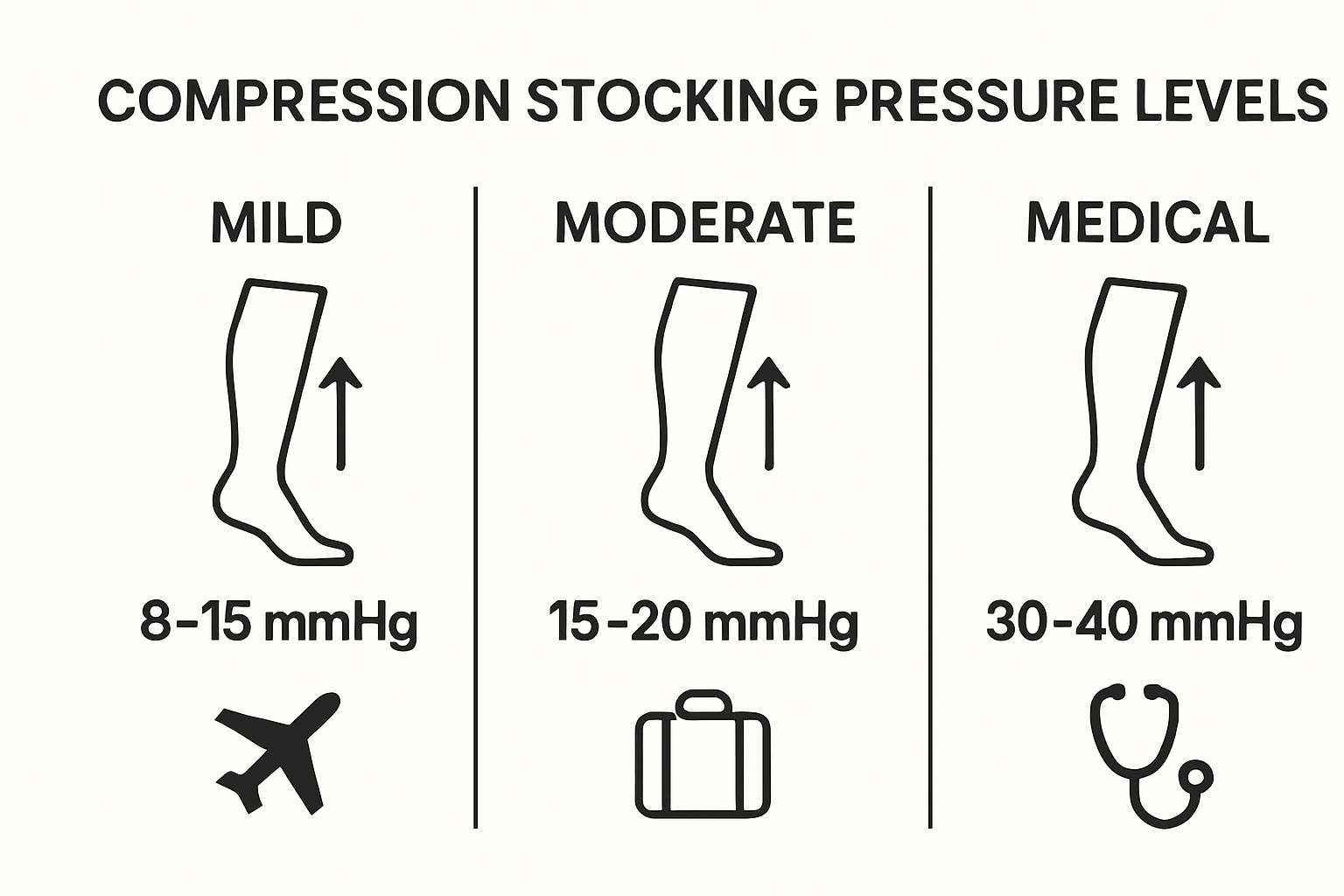 Mild compression suits preventive care and general wellness, while higher pressures address specific medical conditions. Professional medical consultation is recommended to determine the most appropriate compression level for individual health requirements, ensuring that the stockings provide optimal support without causing discomfort or potential circulation restrictions.
Real-World Benefits of Using Compression Stockings During Flights
Air travel presents unique physiological challenges that can significantly impact personal health, making compression stockings a strategic tool for maintaining circulatory wellness. Understanding the tangible benefits of these specialized garments transforms them from a simple accessory to an essential travel companion.
Preventing Travel-Related Health Risks
Clinical research published in PubMed demonstrates that compression stockings provide measurable protection against travel-associated health complications. Long flights create an environment where blood circulation becomes compromised, increasing risks of potentially serious conditions like deep vein thrombosis (DVT) and venous insufficiency.
Key health benefits during air travel include:
- Reducing risk of blood clot formation
- Minimizing leg swelling and discomfort
- Supporting healthy blood circulation
- Decreasing potential inflammation in lower extremities
Comfort and Performance Enhancement
Compression stockings do more than provide medical protection they also enhance overall travel comfort and physical performance. Learn more about travel-specific compression strategies to optimize your journey. These garments help travelers arrive at their destination feeling more refreshed, with reduced leg fatigue and minimal swelling.
Beyond preventing medical complications, compression stockings offer practical advantages for travelers. They help maintain muscle support during extended periods of immobility, reduce the potential for leg cramps, and provide a sense of comfort that can make long-haul flights more manageable. For individuals with pre-existing circulatory conditions, diabetes, or those recovering from recent surgeries, these stockings become an invaluable protective measure during air travel.

Make Air Travel Safer and More Comfortable with Fit Stockings
Flying can put your circulation at risk. Long hours of sitting and reduced movement may cause swelling, discomfort, and even dangerous conditions like deep vein thrombosis, as described in this article. If you want to prevent swollen legs or protect your vascular health while flying, the right compression stockings are essential. At Fit Stockings, we understand the importance of graduated compression, high-quality materials, and precise sizing to address these very challenges. Our curated selection of travel-ready options—such as Jobst compression stockings and waist-high pantyhose styles—makes it simple to find the perfect fit for every trip.
Do not let the risks of flying stop you from enjoying your journey. Shop with confidence at https://fitstockings.com for trusted brands, free shipping, and expert support. Protect your legs today and feel the difference with every flight.
Frequently Asked Questions
What are compression stockings and how do they work during flights?
Compression stockings are specialized garments designed to improve blood circulation by applying graduated pressure from the ankle upwards. During flights, they help counteract the effects of prolonged sitting, reducing the risk of issues like deep vein thrombosis (DVT) by promoting blood flow back to the heart.
How do I choose the right level of compression for air travel?
The appropriate compression level often depends on individual health requirements and medical recommendations. Generally, mild compression (15-20 mmHg) is suited for general wellness, while higher levels (30-40 mmHg) are intended for more serious circulatory conditions. Consulting a healthcare professional is advisable for personalized recommendations.
Can wearing compression stockings during flights help with leg swelling?
Yes, wearing compression stockings can significantly minimize leg swelling during flights. They apply gentle pressure to the legs, helping to maintain blood circulation and preventing fluids from pooling in the lower extremities, which can lead to swelling and discomfort.
Are there any specific features to look for in compression stockings for travel?
When selecting compression stockings for travel, look for high-quality materials that are elastic and breathable. Key features include a graduated compression design, moisture-wicking properties, reinforced heel and toe areas, and a seamless construction to ensure comfort and durability during long flights.