

Journaling for Stress Relief: Boost Calm and Recovery Fast
Over 80 percent of people say journaling helps them manage stress and improve mood. In a world where daily pressures can pile up quickly, having a personal space for reflection can make a real difference. Discover practical steps to set up, personalize, and maintain a stress-relief journaling practice that brings calm and clarity to even the busiest days.
Table of Contents
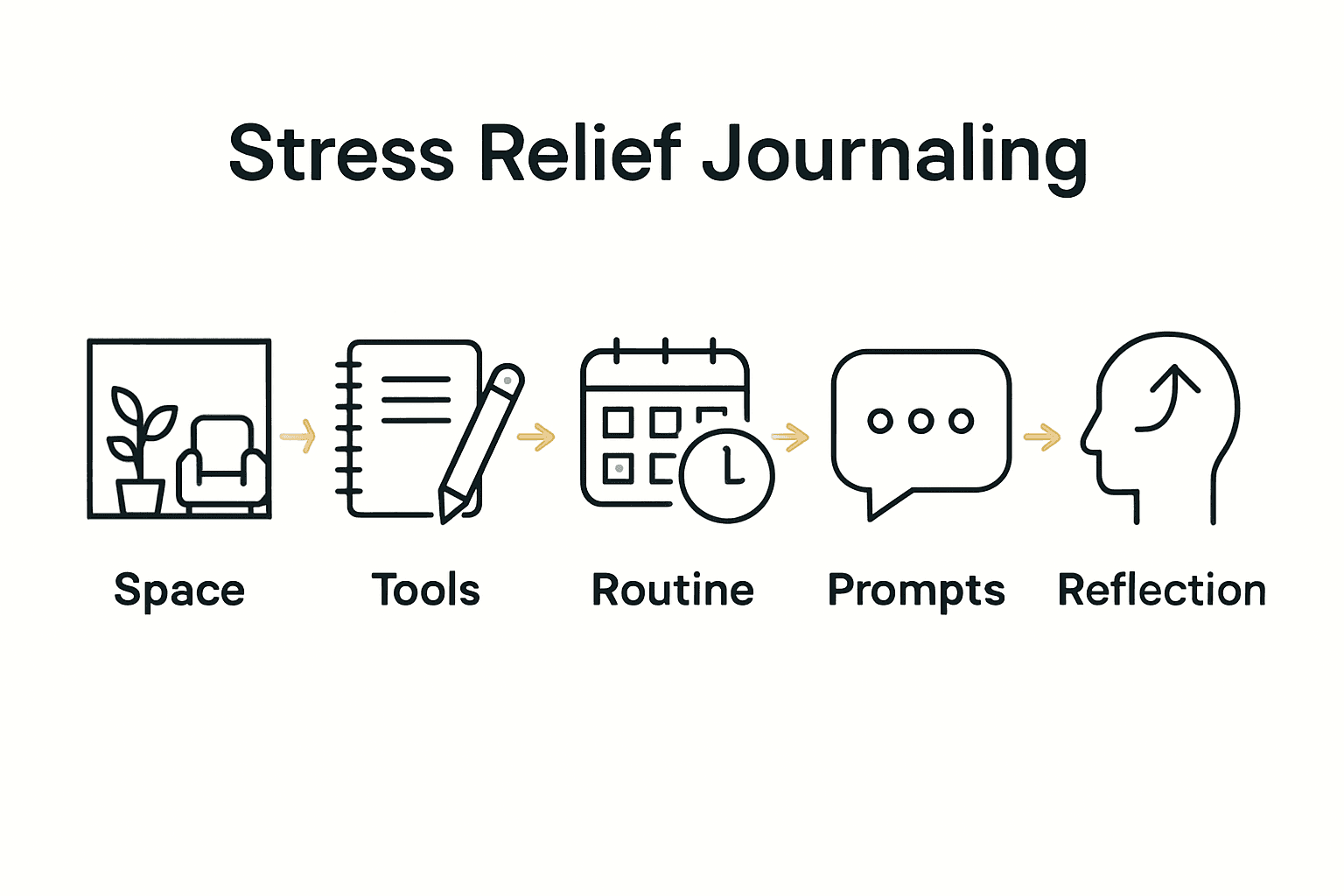
- Step 1: Set Up A Dedicated Journaling Space
- Step 2: Select Supportive Journaling Tools And Materials
- Step 3: Establish A Consistent Journaling Routine
- Step 4: Explore Prompts For Health And Stress Management
- Step 5: Reflect On Progress And Adjust Your Practice
Quick Summary
| Key Point | Explanation |
|---|---|
| 1. Create a dedicated journaling space | Find a quiet, distraction-free spot at home that invites calm and creativity for effective journaling. |
| 2. Select personalized journaling tools | Choose notebooks and pens that inspire you, enhancing your writing experience and making it enjoyable. |
| 3. Establish a consistent writing routine | Dedicate a specific time each day for journaling to build a habit that promotes emotional connection and stress relief. |
| 4. Use prompts for deeper exploration | Explore various journaling prompts to guide your writing and enhance emotional understanding. |
| 5. Reflect and adjust your journaling practice | Regularly review your entries to track progress and modify your approach for greater personal growth and stress management. |
Step 1: Set up a dedicated journaling space
Creating the perfect journaling environment will transform your stress relief practice from a task to a treasured ritual. According to ieconnects, establishing a safe and comfortable space is essential for effective journaling.
First, scout your home for a quiet location where interruptions are minimal. This might be a cozy corner of your bedroom, a peaceful nook by a window, or even a dedicated desk space that feels calm and inviting. Look for an area with soft lighting and minimal distractions. Natural light can be incredibly soothing and help you feel more connected to your writing process.
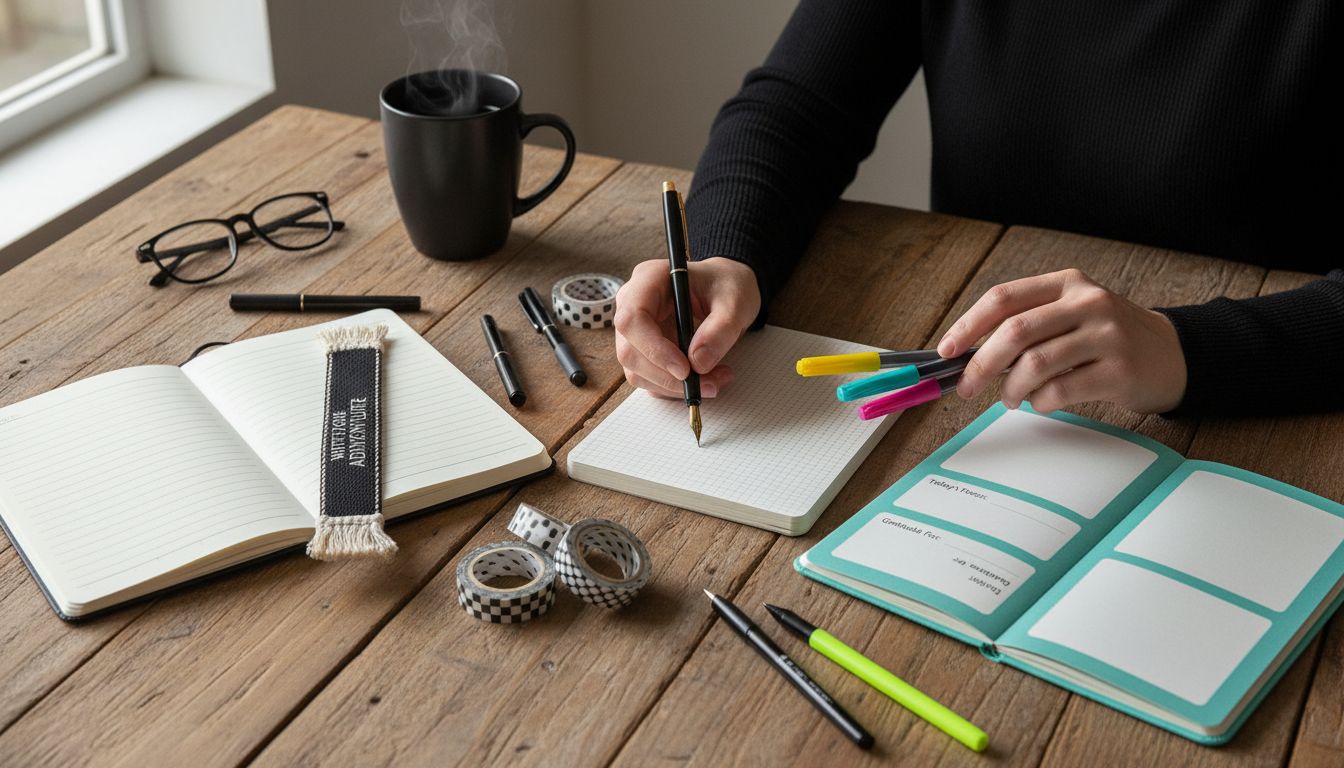
Next, gather your journaling tools thoughtfully. As humanresources suggests, selecting writing materials that resonate with you can significantly enhance your experience. Choose a notebook that feels good in your hands - perhaps one with a cover that inspires you or paper that feels smooth under your pen. Consider having a few colored pens or a dedicated journaling pen to make the process more enjoyable.
A pro tip: Keep your journaling space consistently sacred. This means no work emails, no phone notifications, and no external stressors allowed. Treat this space as your personal sanctuary for emotional exploration and stress relief.
Step 2: Select supportive journaling tools and materials
Choosing the right journaling tools can transform your stress relief practice from a simple writing exercise into a meaningful personal exploration. As research from arxiv reveals, analog journaling involves deeply personal preferences about tools and how you capture your ideas.
Start by selecting a notebook that feels right for you. Think beyond basic lined paper - consider journals with different page layouts like dot grid, which offers flexibility for writing and sketching, or guided journals with prompts. Humanresources highlights that specialized journals can help you focus on specific experiences like gratitude tracking or mindfulness practices.
When picking writing implements, experiment with different pens that make writing enjoyable. Some people love smooth gel pens, while others prefer classic ballpoint or even fountain pens. Your writing tool should feel comfortable and inspire you to write. Pro tip: Consider having a designated journaling pen that you use only for this practice - it becomes a small ritual that signals to your brain that this is a special time for self reflection.
Remember that your journaling toolkit is personal. What works perfectly for someone else might not resonate with you. Trust your instincts and choose materials that make you excited to sit down and write.
Step 3: Establish a consistent journaling routine
Building a regular journaling practice is key to unlocking its powerful stress relief benefits. According to Weliftandshift, creating a journaling habit can be simple even if you start with just a few minutes each day.
Begin by selecting a consistent time that works with your schedule. This might be first thing in the morning with your coffee, during a quiet lunch break, or right before bed. As Mercyreflections suggests, you have flexible options like dedicating 15 to 30 minutes daily for deep emotional work or even just 5 minutes for quick reflection.
Start small to build momentum. Commit to writing for just 5 minutes initially rather than overwhelming yourself with expectations of lengthy entries. Set a gentle alarm or reminder on your phone to help establish the routine. Pro tip: Keep your journal and pen visible in your dedicated journaling space as a visual prompt to write. If you miss a day do not judge yourself harshly. Consistency is about progress not perfection.
As you continue your practice youll discover a rhythm that feels natural and supportive. Your journaling routine will gradually become a cherished moment of self connection and stress relief.
Step 4: Explore prompts for health and stress management
Journaling prompts can transform your writing from a blank page into a powerful tool for emotional exploration and stress relief. According to Success, journaling exercises can include gratitude journaling, free writing, or using specific prompts to guide your thoughts.
Start by experimenting with different prompt styles. One effective approach is the ‘thought record’ method recommended by Socialwork, where you write about stress triggers, examine your thoughts about a situation, and challenge negative thinking patterns. Try prompts like: What am I feeling right now? What thoughts are creating this stress? What evidence supports or contradicts my current thinking?
Develop a collection of go-to prompts that work for you. Some powerful options include gratitude lists (write five things you appreciate today), emotional check-ins (describe your current emotional state), or reflective questions (What did I learn about myself this week?). Pro tip: Keep a running list of prompts in the back of your journal so you always have inspiration when you sit down to write. Remember that there are no wrong answers in journaling - the goal is exploration, not perfection.
Consider exploring breathing exercises for stress relief as a complementary practice to deepen your emotional wellness journey.
Step 5: Reflect on progress and adjust your practice
Journaling is a dynamic practice that evolves with your personal growth and emotional landscape. While technological innovations are emerging in this space as demonstrated by research from Arxiv exploring AI-powered journaling tools that help draw insights from past experiences and imagine future actions the core of reflection remains deeply personal.
Schedule a quarterly review of your journaling practice. Look back through your entries and notice patterns emotional shifts and recurring themes. Ask yourself reflective questions: What insights have I gained? How has my stress management improved? Which prompts felt most meaningful? Which felt forced or unproductive? This self assessment helps you fine tune your approach and ensure your journaling remains a valuable tool for emotional wellness.
Be flexible and kind with yourself during this process. Your journaling practice is not about perfection but about personal growth. Pro tip: Create a simple rating system for your entries perhaps using a 1 to 5 scale that measures how insightful or therapeutic each writing session felt. This can help you objectively track your progress and identify what techniques work best for you.
If you want to explore complementary stress management techniques, consider checking out our mindfulness for pain management guide to expand your emotional wellness toolkit.
Enhance Your Stress Relief Journey with Better Circulation Support
Journaling for stress relief helps you face emotional and physical challenges like discomfort and pain that often come with circulation issues. When stress impacts your legs and overall well-being, supporting your body with medical-grade compression stockings can make a real difference. At Fit Stockings, we understand the importance of combining emotional wellness techniques like journaling with practical solutions to improve circulation and reduce swelling.
Take control of your recovery and boost your calm by exploring our range of compression stockings designed to complement your stress relief routine. Whether managing varicose veins, lymphedema, or pregnancy-related leg fatigue, our trusted brands and styles offer comfort and therapeutic benefits. Start your path toward better health today by visiting Fit Stockings and discover how targeted compression can enhance your journaling practice and overall recovery. Don’t wait to feel better—check out our collection now and bring a new level of care to your stress management routine.
Frequently Asked Questions
How can I set up a dedicated journaling space for stress relief?
Creating a dedicated journaling space involves finding a quiet location in your home where you won’t be interrupted. Choose a spot with soft lighting and minimal distractions, gather your preferred journaling tools, and keep this space sacred by avoiding work or stressors.
What journaling tools should I use for effective stress relief?
Select journaling tools that resonate with you, such as notebooks with layouts that inspire creativity and writing implements that feel comfortable. Experiment with different styles, like guided journals or dot grid notebooks, to find what makes you excited to write.
How do I establish a consistent journaling routine for stress management?
To create a consistent journaling routine, choose a specific time each day to write, starting with just 5 minutes to avoid feeling overwhelmed. Set reminders or keep your journaling tools visible to prompt you, and gradually increase your writing time as you develop a habit.
What types of prompts can I use to enhance my stress relief journaling practice?
Explore various journaling prompts, including gratitude lists or emotional check-ins, to guide your writing. These prompts help focus your thoughts and feelings, providing a structured way to process emotions and track your stress levels over time.
How can I reflect on my journaling progress and adjust my practice?
Schedule regular reviews of your journaling entries, looking for patterns or insights about your emotional state and stress management.
 Consider creating a simple rating system for your entries to help identify which techniques have been most effective for your personal growth.
What should I do if I miss a day of journaling?
If you miss a day of journaling, avoid judging yourself harshly; focus on consistency rather than perfection. Acknowledge the missed day and commit to resuming your practice without pressure, gently reminding yourself to keep your journaling routine enjoyable.
Recommended
- Breathing Exercises for Stress: Step-by-Step Relief Guide – Fit Stockings
- Understanding Stress Relief During Pregnancy – Fit Stockings
- Complete Guide to Mindfulness for Pain Management – Fit Stockings
- Understanding Meditation and Pain Management Techniques – Fit Stockings
- Schrittweise innere Ruhe finden: Praktischer Leitfaden für Vielbeschäftigte
- Effective Stress Management for Leaders: Master Your Resilience|CS