

Complete Guide to Mindfulness for Pain Management
About one in five adults worldwide experience chronic pain, making daily life a struggle for millions. Living with ongoing discomfort takes a toll not just physically, but mentally as well. Mindfulness is gaining attention as a gentle yet effective way to address pain without medication. By learning to pay close attention to thoughts and sensations, many people report less stress and a better overall sense of wellbeing.
Table of Contents
- Defining Mindfulness For Pain Management
- Core Mindfulness Techniques For Pain Relief
- Benefits For Chronic And Acute Pain Conditions
- Integrating Mindfulness With Compression Therapy
- Common Pitfalls And How To Avoid Them
Key Takeaways
| Point | Details |
|---|---|
| Mindfulness Definition | Mindfulness involves intentional awareness in the present moment, fostering a nonjudgmental observation of pain and emotions. |
| Transformative Pain Management | Practicing mindfulness can significantly reduce chronic pain and improve emotional resilience, promoting overall well-being. |
| Effective Techniques | Techniques such as body scans, breath awareness, and guided meditation are essential tools for managing pain effectively. |
| Overcoming Challenges | Consistent practice, self-compassion, and managing expectations are crucial for successfully integrating mindfulness into pain management. |
Defining Mindfulness for Pain Management
Mindfulness represents a powerful approach to managing chronic pain by transforming how we perceive and interact with physical discomfort. According to Mayo Clinic Health System, mindfulness is defined as “awareness that arises through paying attention, on purpose, in the present moment, nonjudgmentally.”
At its core, mindfulness is about cultivating a specific type of awareness that allows individuals to observe their experiences without getting entangled in emotional reactions. This practice involves intentionally directing attention to the present moment, acknowledging sensations, thoughts, and emotions without labeling them as good or bad. Utah State University Extension explains that mindfulness combines focused attention on physical sensations like breathing with open monitoring of thoughts and emotions.
For individuals experiencing chronic pain, mindfulness offers a transformative approach to pain management. Instead of fighting against pain or becoming overwhelmed by negative emotions, practitioners learn to:
- Observe pain sensations objectively
- Reduce stress and anxiety associated with chronic conditions
- Develop greater emotional resilience
- Create psychological distance from pain experiences
- Improve overall quality of life
The technique is not about eliminating pain completely but changing one’s relationship with pain. By practicing non-judgmental awareness, individuals can learn to respond to physical discomfort with greater calm and acceptance, potentially reducing the suffering often associated with chronic pain conditions.
Learn more about meditation and pain management techniques to complement your mindfulness practice.
Core Mindfulness Techniques for Pain Relief
Mindfulness offers several practical techniques specifically designed to help individuals manage chronic pain more effectively. Harvard Health highlights the body scan exercise as a powerful method for pain management, which involves systematically focusing attention on different body parts while maintaining a non-judgmental awareness.
Key Mindfulness Techniques
The body scan technique provides a structured approach to pain management. Here’s how to practice it:
-
Find a comfortable position, either lying down or seated
-
Begin by taking slow, deep breaths
-
Start at your toes and gradually move attention upward through your body
-
Notice sensations in each area without trying to change them
-
Acknowledge pain or discomfort without emotional reaction
According to Mayo Clinic Health System, mindfulness exercises help individuals manage negative thoughts about pain, effectively reducing depression and anxiety symptoms associated with chronic conditions.
Beyond the body scan, other effective mindfulness techniques include:
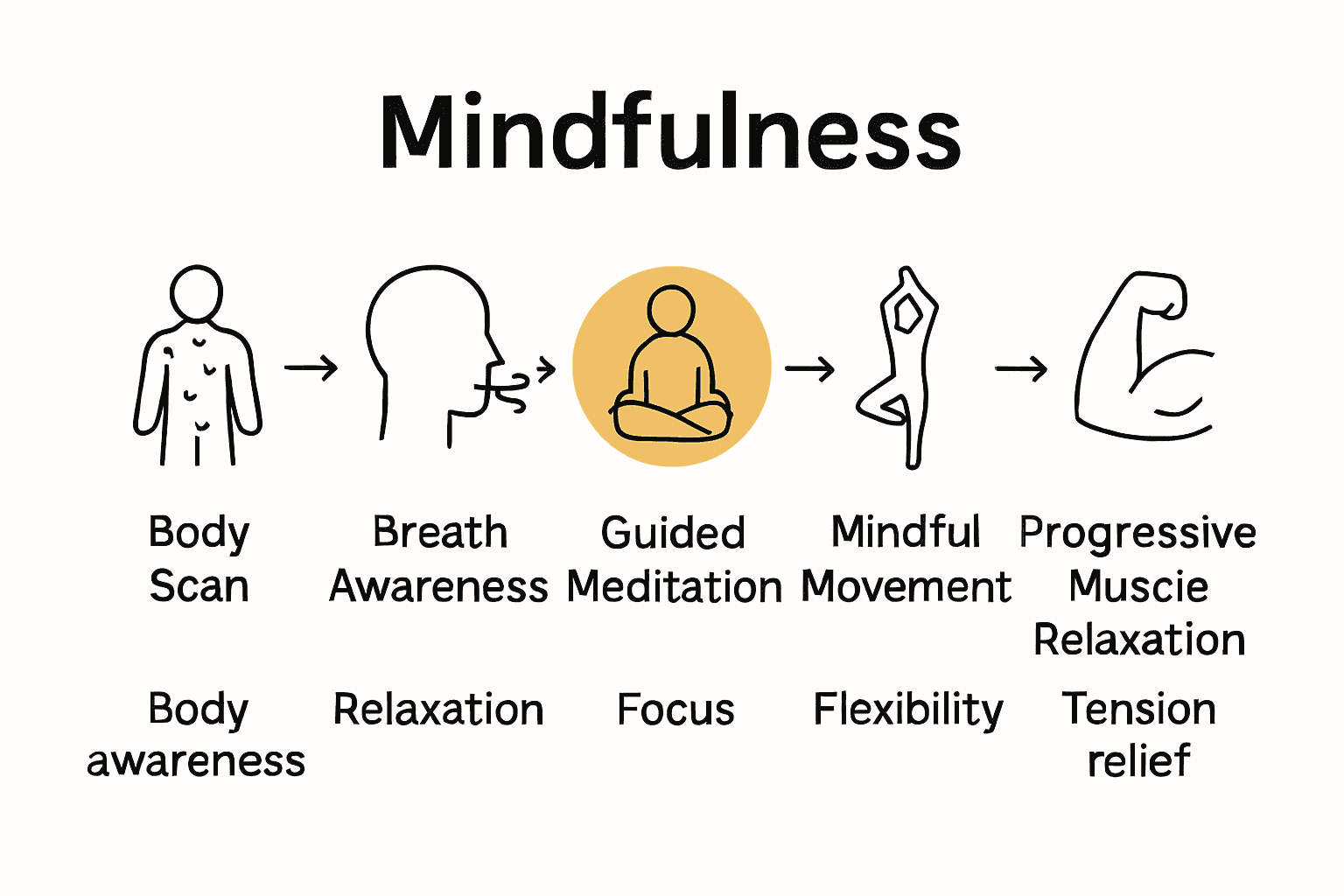
Here’s a summary of core mindfulness techniques for pain relief:
| Technique | Method Description | Primary Benefits |
|---|---|---|
| Body Scan | Focus attention on each body part | Increased body awareness Reduced reactivity |
| Breath Awareness | Observe natural breathing patterns | Calms mind Reduces stress |
| Guided Meditation | Use audio guidance to direct focus | Eases anxiety Improves concentration |
| Mindful Movement | Gentle movements with awareness | Enhances flexibility Reduces pain |
| Progressive Muscle Relaxation | Tense and release muscle groups | Eases tension Promotes relaxation |
- Breath Awareness: Focusing on natural breathing patterns
- Guided Meditation: Using audio instructions to direct attention
- Mindful Movement: Gentle stretching with conscious awareness
- Progressive Muscle Relaxation: Systematically tensing and releasing muscle groups
Explore breathing techniques for stress relief to complement your mindfulness practice and enhance pain management strategies.
Benefits for Chronic and Acute Pain Conditions
Mindfulness offers profound therapeutic benefits for individuals struggling with both chronic and acute pain conditions, providing a holistic approach to pain management that goes beyond traditional medical treatments. Mayo Clinic Health System reports that regular mindfulness practice can significantly reduce pain experiences while simultaneously decreasing symptoms of depression and anxiety.
Comprehensive Pain Management Benefits
The impact of mindfulness on pain management is multifaceted. Utah State University Extension highlights that mindfulness-based approaches have demonstrated remarkable effectiveness over 35 years, with proven outcomes including:
- Reduced pain reporting
- Decreased reliance on pain medications
- Significant reduction in psychological distress
- Improved overall quality of life
- Enhanced emotional resilience
Mindfulness techniques work by fundamentally changing how individuals perceive and interact with pain. Instead of viewing pain as an enemy to be fought, practitioners learn to observe sensations objectively, creating psychological distance that can diminish suffering. This approach is particularly powerful for conditions involving:
- Chronic back pain
- Fibromyalgia
- Arthritis
- Nerve-related pain conditions
- Post-surgical recovery pain
Learn about stress relief techniques during recovery to complement your pain management strategy and support holistic healing.
Integrating Mindfulness with Compression Therapy
Combining mindfulness techniques with compression therapy offers a holistic approach to managing pain and supporting physical healing. PubMed Research suggests that mindfulness-based interventions can effectively modulate pain perception, potentially enhancing the therapeutic benefits of compression treatments.
Synergistic Pain Management Approach
Mindfulness practice can transform how patients experience and respond to physical discomfort while wearing compression garments. PubMed Clinical Studies highlight that mindfulness meditation improves coping mechanisms and reduces chronic pain symptoms, making it an ideal complement to compression therapy.
Key strategies for integrating mindfulness with compression therapy include:
- Practicing breath awareness while adjusting compression garments
- Performing body scan meditation during compression treatment
- Cultivating non-judgmental awareness of physical sensations
- Using mindful breathing to manage discomfort from compression
- Developing emotional resilience during healing processes
The integration process involves creating a deliberate, attentive approach to wearing compression garments.
 Instead of viewing the treatment as uncomfortable, practitioners learn to observe sensations objectively, transforming potential resistance into a healing experience.
Learn about compression therapy contraindications to ensure safe and effective treatment integration.
Common Pitfalls and How to Avoid Them
Mindfulness practice for pain management isn’t always straightforward, and many individuals encounter challenges that can derail their progress. Harvard Health warns that practitioners often find initial mindfulness attempts boring or seemingly ineffective, emphasizing that consistent daily practice remains crucial for successful pain management.
Key Challenges in Mindfulness Practice
One of the most significant obstacles is the tendency to become frustrated with the practice itself. Mayo Clinic Health System highlights that individuals frequently struggle with managing negative thoughts about pain, which can undermine mindfulness efforts.
Common pitfalls to watch for include:
- Expecting immediate results
- Becoming self-critical during practice
- Inconsistent meditation schedules
- Judging your pain experience
- Forcing relaxation instead of observing sensations
To overcome these challenges, practitioners should:
- Start with short, manageable meditation sessions
- Practice self-compassion
- Create a consistent daily routine
- Accept thoughts and sensations without judgment
- View mindfulness as a skill that improves with time
Remember, mindfulness is a journey. Some days will feel more challenging than others, but persistence is key. Think of it like learning a new skill – progress comes with patience and consistent effort.
Learn about stress relief strategies to support your mindfulness practice and pain management journey.
Enhance Your Pain Management Journey with Targeted Compression Therapy
Living with chronic pain means facing daily challenges that impact your comfort and mobility. The article highlights how mindfulness builds emotional resilience and helps you observe pain with calm acceptance. To complement these powerful mental techniques, wearing medical-grade compression stockings can provide essential physical support. Compression therapy promotes better circulation and reduces swelling associated with conditions like varicose veins, lymphedema, and diabetic circulation issues while enhancing your overall recovery process.
Discover a curated selection of trusted compression stockings at Fit Stockings. Benefit from various gradients and styles designed to fit your unique needs. By combining mindfulness practices with the right compression gear, you create a holistic approach to pain relief that addresses both mind and body. Don’t wait to improve your quality of life. Explore our collection today and take the next step toward managing pain more effectively with compression therapy and mindful living.
Frequently Asked Questions
What is mindfulness and how does it help with pain management?
Mindfulness is the practice of paying attention to the present moment nonjudgmentally. It helps with pain management by allowing individuals to observe pain sensations objectively, reduce stress and anxiety, and develop emotional resilience, ultimately improving their quality of life.
What are some core mindfulness techniques for pain relief?
Core mindfulness techniques for pain relief include the body scan exercise, breath awareness, guided meditation, mindful movement, and progressive muscle relaxation. These methods promote awareness and acceptance of sensations, helping alleviate discomfort associated with chronic pain.
Can mindfulness reduce reliance on pain medications?
Yes, regular mindfulness practice can significantly reduce pain experiences and decrease reliance on pain medications. Mindfulness techniques encourage individuals to change their relationship with pain, leading to a holistic approach to pain management.
How can I integrate mindfulness with compression therapy?
You can integrate mindfulness with compression therapy by practicing breath awareness while adjusting garments, performing body scan meditation during treatment, and cultivating non-judgmental awareness of physical sensations. This creates a more attentive and healing experience while using compression garments.
Recommended
- Understanding Meditation and Pain Management Techniques – Fit Stockings
- Breathing Exercises for Stress: Step-by-Step Relief Guide – Fit Stockings
- Understanding Stress Relief During Pregnancy – Fit Stockings
- Complete Guide to Tips for Medication Management – Fit Stockings
- 7 Massage Techniques for Pain Relief You Should Try - Verdure Registered Massage Therapy