

Optimize Your Performance with Compression Socks for Running
Finding the perfect compression socks for running is not about grabbing the first pair you see. Your sock choice can make or break your recovery, comfort, and running performance. Most runners just look for the right size, but there is a science to matching compression, fabric, and fit to your needs. The biggest mistake is thinking one size or style fits everyone. Your ultimate running advantage might come from a much more personal solution than you expected.
Table of Contents
- Step 1: Assess Your Compression Needs
- Step 2: Choose The Right Compression Socks
- Step 3: Properly Measure Your Legs For Sizing
- Step 4: Wear Compression Socks Correctly Before Your Run
- Step 5: Monitor Comfort And Adjust Fit During Your Run
- Step 6: Evaluate Recovery And Effects Post-Run
Quick Summary
| Key Point | Explanation |
|---|---|
| 1. Assess your compression needs | Evaluate your running profile, physical condition, and goals to select the appropriate level of compression. |
| 2. Choose the right compression socks | Consider factors like graduated compression levels and sock materials that support your specific running style and conditions. |
| 3. Accurately measure your legs | Proper leg measurements are essential for finding well-fitting compression socks that provide optimal support and effectiveness. |
| 4. Wear compression socks correctly | Ensure proper application of the socks to maximize their benefits and prevent discomfort during your run. |
| 5. Monitor comfort during your run | Regularly check how the socks feel while running to adjust fit or address any discomfort that may arise. |
Step 1: Assess Your Compression Needs
Choosing the right compression socks for running starts with understanding your unique physiological requirements and performance goals. Not all runners need the same level of compression or support, which means a personalized approach is crucial for maximizing potential benefits.
Begin by evaluating your current running profile and physical condition. Are you a long distance marathon runner experiencing muscle fatigue, or a sprinter seeking improved recovery? Recreational runners might need different compression levels compared to competitive athletes. Consider factors like your typical weekly mileage, running terrain, and any existing circulatory challenges or previous leg injuries.
Physical assessment involves checking several key indicators. Look for signs of muscle soreness that persists beyond normal recovery periods, occasional leg swelling after extended runs, or discomfort in your lower extremities. These symptoms might suggest you could benefit from graduated compression technology. Research from sports medicine experts suggests that compression socks can help reduce muscle oscillation and improve venous return during intense physical activities.
If you have any pre-existing medical conditions like varicose veins, diabetes related circulatory issues, or a history of deep vein thrombosis, consulting with a healthcare professional becomes essential before selecting your compression socks. They can provide personalized recommendations about compression gradients most suitable for your specific health profile.
To help you read more about understanding compression levels, we recommend tracking your running performance and physical responses after initial use. Pay attention to how your legs feel during and after runs, noting any changes in muscle fatigue, recovery time, or overall comfort. This empirical approach will help you fine tune your compression sock selection for optimal running performance.
Step 2: Choose the Right Compression Socks
Selecting the ideal compression socks for running requires careful consideration of multiple factors beyond basic sizing. Your sock choice can dramatically impact performance, recovery, and overall running comfort. Think of compression socks as specialized equipment tailored to your unique physiological demands and running style.
Research from sports medicine experts highlights the importance of graduated compression, which provides strategic pressure distribution from ankle to calf. Runners should focus on compression levels typically ranging between 15-30 mmHg, with lower pressures suitable for general support and higher pressures recommended for more intense training or specific medical conditions.
Material composition plays a critical role in sock performance. Look for moisture-wicking fabrics like nylon and spandex blends that offer breathability and prevent excessive sweating. Technical running compression socks should provide a balance between compression, comfort, and temperature regulation. Some advanced models integrate targeted compression zones that support specific muscle groups, potentially reducing muscle vibration and enhancing blood circulation during extended running sessions.
Consider your specific running environment and typical training conditions. Trail runners might prioritize more durable materials with additional cushioning, while track athletes could prefer lightweight, streamlined designs. Seamless construction becomes crucial to prevent potential chafing or irritation during prolonged running activities.
To help you make an informed decision, check out our comprehensive guide on choosing compression socks, which provides detailed insights into matching sock characteristics with individual running requirements. Remember that proper fit is paramount the socks should feel snug but not restrictive, with no bunching or sliding during movement. When trying on compression socks, ensure they provide uniform pressure without creating uncomfortable pinch points or cutting off circulation.
Step 3: Properly Measure Your Legs for Sizing
Accurate leg measurement is the cornerstone of finding compression socks that provide optimal support and performance enhancement for runners. Incorrect sizing can lead to reduced effectiveness or potential discomfort, making precise measurements critical to your running experience.
Begin by gathering essential tools: a flexible fabric measuring tape, a full length mirror, and ideally a partner who can assist you in taking measurements.
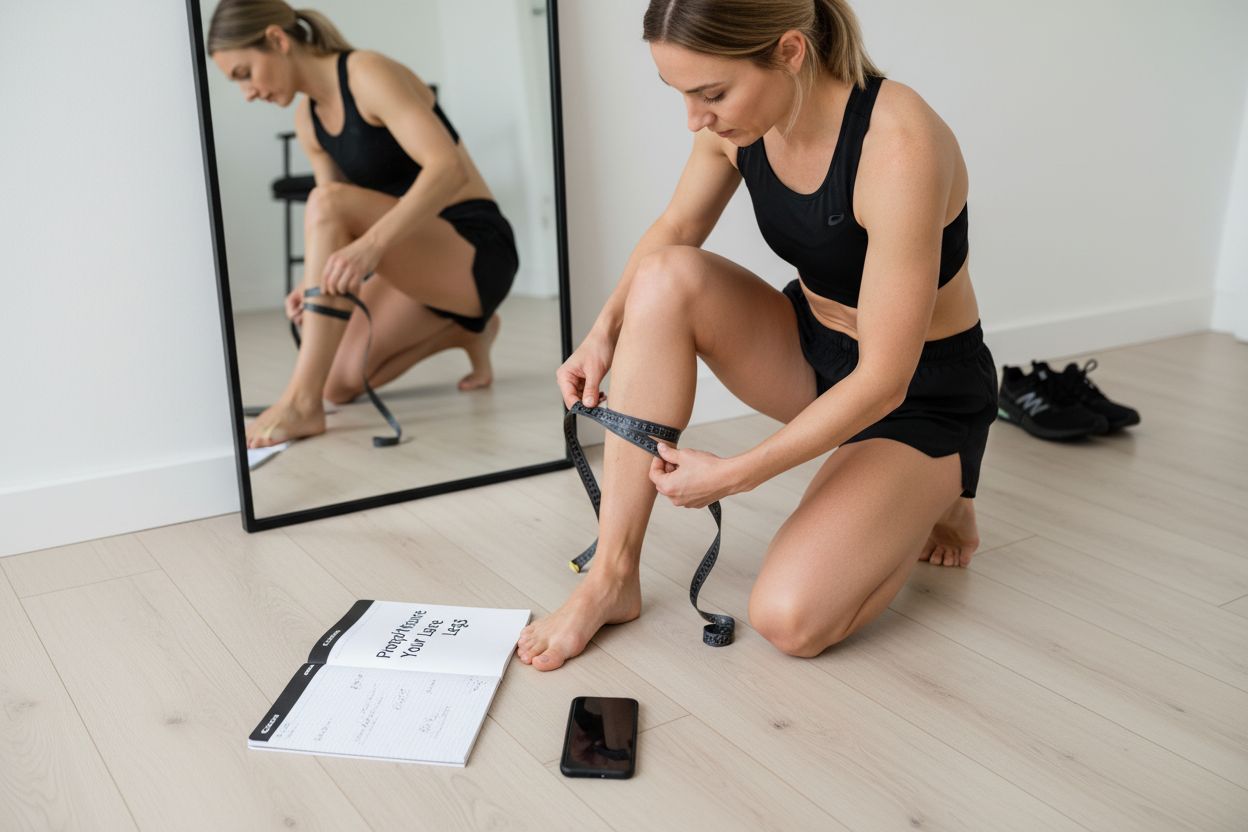 Stand barefoot on a hard, flat surface with your weight evenly distributed. Ensure you are wearing minimal clothing or tight fitting workout attire to get the most accurate measurements.
The key measurement points involve your calf circumference and leg length. Wrap the measuring tape around the widest part of your calf muscle, keeping the tape parallel to the ground and maintaining a gentle tension without compressing the muscle. Measure in the morning when leg swelling is minimal to ensure the most consistent sizing. For leg length, measure from the floor to the bottom of your kneecap for knee high socks, or from the floor to the mid-thigh area for thigh high compression socks.
Research indicates that precise measurements can significantly impact the therapeutic and performance benefits of compression wear. Take multiple measurements to ensure accuracy, and always round to the nearest half inch or centimeter when consulting sizing charts. Some runners might find their measurements fall between standard sizes this is normal, and in such cases, consulting the manufacturer’s specific sizing recommendations becomes crucial.
To help you navigate this process with confidence, check out our detailed guide on measuring compression stockings, which provides visual aids and additional tips. Pay special attention to the sock’s stretch potential certain materials offer more flexibility, which can influence your final sizing decision. A well-fitted compression sock should feel snug but not restrictive, providing consistent pressure without causing discomfort or limiting your natural range of motion during running.
The table below lists the essential tools and their purposes for accurately measuring your legs before selecting compression socks, as explained in the article.
| Tool/Material | Purpose |
|---|---|
| Flexible fabric measuring tape | Measure calf circumference and leg length |
| Full length mirror | Ensure accuracy and view while measuring |
| Partner/helper (optional) | Assist in taking precise measurements |
| Minimal or tight workout attire | Achieve the most accurate sizing |
| Hard, flat surface | Stand evenly for consistent results |
Step 4: Wear Compression Socks Correctly Before Your Run
Properly putting on compression socks is an art form that requires technique, patience, and attention to detail. Incorrect application can diminish the performance benefits and potentially cause discomfort during your run. Think of this process as preparing your most important running equipment your legs for optimal performance.
Research indicates that proper sock application impacts compression effectiveness and muscle support. Start by ensuring your legs are completely dry and free from lotions or oils that might interfere with the sock’s grip. Sit in a comfortable position with your legs elevated slightly, which helps reduce initial resistance when pulling the socks upward. Gather the sock fabric in your hands, creating a smooth, wrinkle free tunnel that will easily slide over your foot and leg.
Begin by inserting your foot carefully, using your fingers to guide the sock smoothly over your heel and ankle. Avoid bunching or twisting the fabric, which can create pressure points and reduce the sock’s therapeutic compression. Gradually pull the sock upward, smoothing out any wrinkles as you move. For knee high compression socks, ensure the top band sits comfortably without cutting into your leg, typically about two inches below the knee crease. The sock should feel snug but not restrictive, allowing you to maintain full range of motion.
To help runners master this technique, we recommend reviewing our detailed guide on putting on compression stockings, which provides visual demonstrations and additional tips. Pay close attention to how the socks feel during initial wear. They should provide a consistent, graduated pressure that feels supportive without causing discomfort. If you experience any pinching, extreme tightness, or circulation restriction, remove the socks and recheck your sizing or application technique.
The table below summarizes common compression sock problems that runners may experience during use, along with potential causes and solutions based on best practices discussed in the article.
| Problem | Possible Cause | Solution |
|---|---|---|
| Socks feel too tight | Incorrect sizing or compression level | Recheck measurements, consider lower compression |
| Fabric bunching or sliding | Improper fit or incorrect application | Smooth out wrinkles, adjust sock position |
| Uneven pressure or pinching | Sock twisted or not evenly distributed | Remove sock and reapply, ensure even tension |
| Hotspots or friction areas | Sock movement during run or poor fit | Readjust sock, check sizing, consider other styles |
| Excessive sweating or discomfort | Poor material breathability or weather | Choose moisture-wicking materials, carry spare pair |
| Persistent marks after wear | Socks too tight or wrong size | Switch to correct size, monitor skin response |
| No improvement in recovery/comfort | Unsuitable compression level or misuse | Track responses, try different compression, consult specialist |
Step 5: Monitor Comfort and Adjust Fit During Your Run
Monitoring your compression socks during a run is as critical as selecting and putting them on correctly. Comfort and performance are dynamic experiences that require constant awareness, especially for runners seeking optimal muscle support and recovery benefits.
Sports medicine research suggests that individual body responses to compression can vary significantly during physical activity. Start by performing a short warm up to assess how the socks feel during initial movement. Pay attention to any unusual sensations like pinching, sliding, or uneven pressure that might indicate improper fit or positioning. Early detection of discomfort can prevent potential running injuries and ensure consistent performance.
During your run, periodically perform a quick mental body scan to evaluate sock performance. Check for signs of fabric bunching around the ankle or knee, which can create uncomfortable pressure points and reduce the sock’s therapeutic compression. If you experience any hotspots or areas of friction, it might be necessary to make minor adjustments. This could involve pulling the sock back into its original position or assessing whether the compression level matches your current running intensity.
Temperature and moisture management become crucial factors during longer running sessions. Your socks should continue wicking moisture and maintaining a comfortable temperature. Excessive sweating or sudden temperature changes can alter how compression socks feel and perform. Some runners find it helpful to carry a spare pair of socks for longer training sessions, allowing for a quick change if the original pair becomes saturated or loses its supportive properties.
To help runners optimize their compression sock experience, we recommend exploring additional guidance on maintaining comfort during physical activity. Remember that your body’s response to compression can change with factors like hydration, terrain, and overall fitness level. Treat your compression socks as a dynamic piece of running equipment that requires ongoing attention and adjustment.
Step 6: Evaluate Recovery and Effects Post-Run
Recovery is the critical phase where your body transforms the stress of running into improved fitness and performance. Compression socks play a pivotal role in this recovery process, offering more than just immediate comfort after your run. Understanding how your body responds to compression wear requires systematic observation and reflection.
Research demonstrates that post-run compression can significantly impact muscle recovery and reduce inflammation. Immediately after your run, keep your compression socks on for at least 1-2 hours to maximize their physiological benefits. Take time to perform a comprehensive body assessment. Pay close attention to muscle soreness, leg fatigue, and overall recovery speed. Notice how your legs feel compared to runs where you did not use compression socks track any differences in recovery time, muscle tenderness, and general muscle performance.
Document your observations in a running journal or digital tracking app. Note specific metrics like perceived muscle soreness on a scale of 1-10, recovery time between runs, and any changes in your running performance. Some runners find that consistent compression sock use leads to more consistent recovery patterns and reduced muscle oscillation. Look for trends over weeks and months rather than focusing on single run experiences, as the benefits of compression technology often emerge through cumulative use.
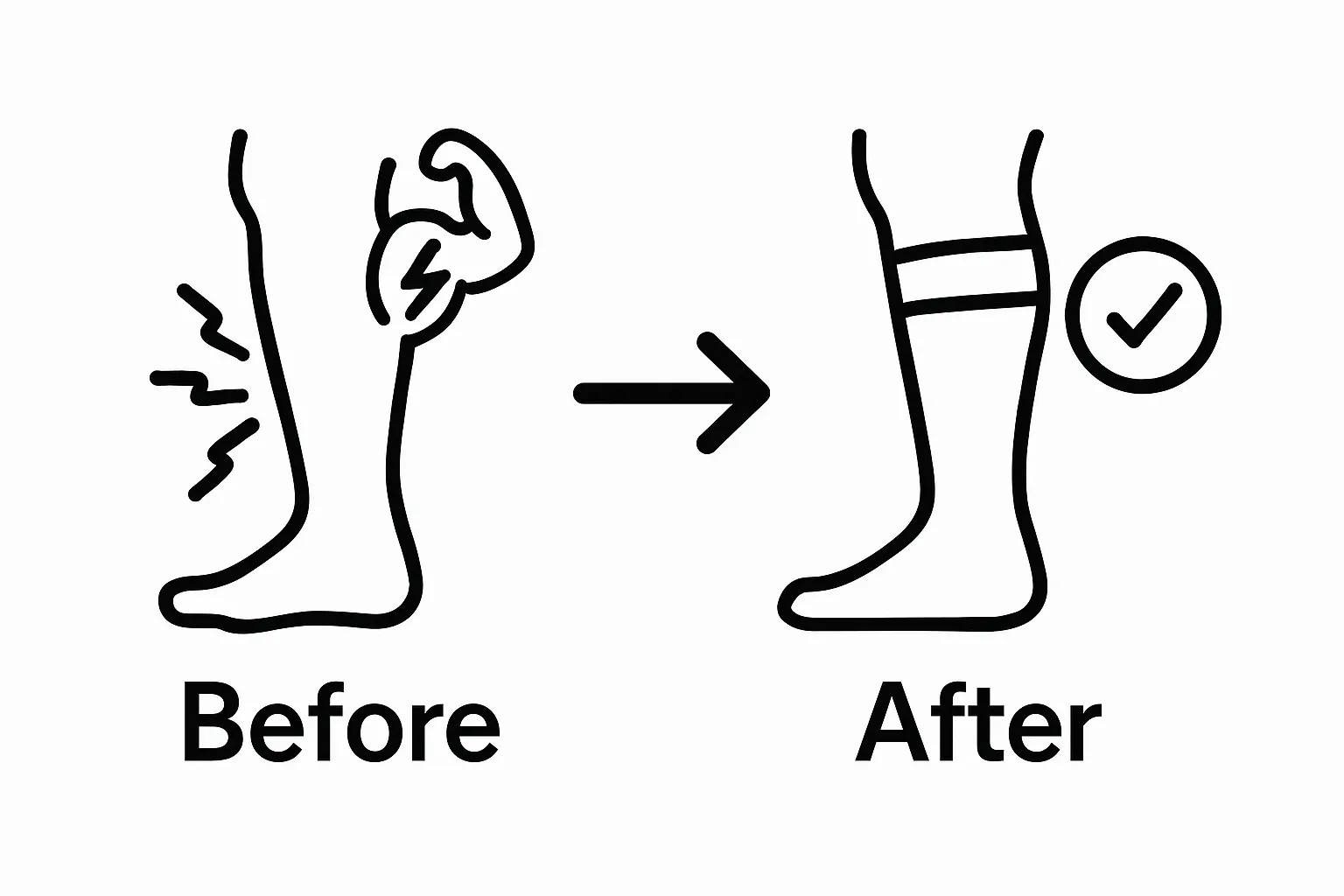
Physical indicators provide crucial feedback about your compression sock effectiveness. Check for any skin irritation, unusual marks, or areas of prolonged pressure. While mild temporary indentations are normal, persistent marks might indicate that your socks are either too tight or not the correct size. Mild compression should feel supportive without leaving lasting impressions on your skin. If you consistently experience discomfort or notice no performance improvement, it might be time to reassess your sock selection or consult with a sports performance specialist.
To help runners optimize their recovery strategy, explore our comprehensive guide on post-exercise recovery techniques. Remember that compression socks are a tool in your recovery arsenal, working best when integrated thoughtfully into a holistic approach to training and muscle maintenance.
Find Your Perfect Running Compression Socks with Fit Stockings
You work hard to optimize your training and recovery, but finding the right compression socks can be challenging. Whether you struggle with muscle fatigue, leg discomfort, or want to speed up recovery post-run, it’s crucial to choose socks that match your personal needs and fit you perfectly. This article explained how factors like compression level, fit, and proper wear can either help you reach your running goals or hold you back. Many runners spend too much time searching for reliable and effective solutions, only to end up with subpar gear that doesn’t deliver the promised results.
Fit Stockings is dedicated to helping you take the guesswork out of choosing your next pair of compression socks. Explore our Home page for a curated selection of medical-grade compression stockings in every style, gradient, and size. Seeking trusted brands for runners? Visit our Jobst collection and discover options designed for both athletic performance and medical needs. With free shipping and competitive pricing, there’s never been a better time to invest in your running comfort. Ready to experience the benefits firsthand? Start shopping now at Fit Stockings and give your legs the support they truly deserve.
Frequently Asked Questions
What are compression socks, and how do they benefit runners?
Compression socks are specialized garments designed to apply pressure to the lower legs, helping to improve blood circulation, reduce muscle oscillation, and enhance recovery. Runners can benefit from compression socks by experiencing less muscle fatigue and quicker recovery times post-run.
How do I choose the right compression level for my needs?
The optimal compression level for runners typically ranges from 15-30 mmHg. Lower compression is suitable for general support, while higher levels provide targeted support for intense training or specific medical conditions. It’s essential to assess your running profile and consult with healthcare professionals if you have existing health issues.
How should I properly measure my legs for compression sock sizing?
To accurately measure for compression socks, use a flexible tape measure to determine your calf circumference and leg length while standing barefoot. Measure at the widest part of your calf and from the floor to the bottom of your kneecap for knee-high socks, or to mid-thigh for thigh-high socks. Always measure in the morning for the most consistent sizing.
What should I do if my compression socks feel uncomfortable during a run?
If your compression socks feel uncomfortable, check for proper fit and application. Ensure there are no bunching or twisting of the fabric, and that the socks provide consistent pressure without restrictive tightness. Readjust the socks if necessary, and if discomfort persists, consider reevaluating the size or compression level.
Recommended
- Can Compression Socks Be Too Tight? What You Need to Know 2025 – Fit Stockings
- How to Choose Compression Socks: A Helpful Guide for 2025 – Fit Stockings
- Compression Socks for Walking: Health Benefits and Top Uses 2025 – Fit Stockings
- Compression Stockings for Athletes: 2025 Guide to Better Health – Fit Stockings