

Staying Active at Work: Complete Essential Guide
Over 75 percent of employees spend most of their workday sitting, increasing the risk of serious health problems over time. As workplaces evolve, the focus on physical activity is shifting from optional perks to fundamental strategies for long-term wellness and productivity. Learning how to define, encourage, and sustain workplace movement can help organizations reduce health risks, boost morale, and create a more energized environment for everyone.
Table of Contents
- Defining Workplace Physical Activity Needs
- Main Types of On-the-Job Movement
- Health Benefits of Staying Active at Work
- Safe Movement Practices and Ergonomic Tips
- Compression Therapy’s Role for Office Workers
- Common Mistakes and What to Avoid
Key Takeaways
| Point | Details |
|---|---|
| Comprehensive Physical Activity Needs | Effective workplace wellness strategies must consider individual health, job demands, and organizational culture to promote physical activity. |
| Diverse Movement Strategies | Incorporating various on-the-job movements, such as walking meetings and desk-based exercises, fosters an active work environment. |
| Health Benefits of Movement | Regular physical activity at work enhances physical health, mental wellness, and professional performance while minimizing healthcare costs. |
| Avoid Common Mistakes | Tailoring physical activity programs to employee needs and engaging staff feedback is crucial for successful workplace wellness initiatives. |
Defining Workplace Physical Activity Needs
Physical activity isn’t just a personal health choice - it’s a critical workplace wellness strategy. According to research from PubMed, workplace physical activity plays a pivotal role in reducing risks associated with chronic health conditions, including cardiovascular diseases and certain cancers.
Understanding workplace physical activity needs requires a comprehensive approach that considers individual health variations, job demands, and organizational culture. The CDC highlights that effective physical activity strategies go beyond simple exercise recommendations, focusing on creating environments that naturally encourage movement and wellness.
Key components of defining workplace physical activity needs include:
- Assessing individual employee health profiles
- Analyzing job-specific physical demands
- Identifying potential sedentary work risks
- Creating flexible movement opportunities
- Developing targeted wellness interventions
Successful workplace physical activity programs recognize that one size does not fit all. They must be adaptable, considering factors like age, existing health conditions, work environment, and personal fitness levels. By taking a holistic and personalized approach, organizations can design strategies that not only promote physical health but also enhance overall employee productivity and engagement.
Main Types of On-the-Job Movement
Workplace physical activity isn’t confined to traditional exercise routines. According to research from the CDC, employees can integrate movement into their daily work lives through various strategic activity types that go beyond standard gym sessions.
The primary categories of on-the-job movement include:
-
Desk-Based Movements
- Seated stretching exercises
- Chair yoga
- Micro-movements during work tasks
-
Walking Activities
- Walking meetings
- Treadmill workstations
- Scheduled walking breaks
-
Active Commuting
- Cycling to work
- Walking or partial walking commutes
- Using stairs instead of elevators
Integrating these movement strategies requires understanding individual workplace environments and employee capabilities. Some organizations implement dynamic workstations that allow employees to alternate between sitting and standing, promoting natural movement throughout the workday. The key is creating an adaptive approach that seamlessly blends physical activity with professional responsibilities.
The most effective on-the-job movement strategies are those that feel natural and unobtrusive. By designing workplace environments and policies that encourage subtle, consistent movement, employers can help staff maintain physical health without disrupting productivity. These approaches not only support physical wellness but also contribute to improved mental focus, reduced stress, and enhanced overall workplace engagement.
Health Benefits of Staying Active at Work
Staying physically active during work hours is more than just a wellness trend - it’s a critical component of overall health and professional performance. According to research from PubMed, regular workplace physical activity significantly improves psycho-physical performance, enhances social relationships, and reduces work-related injuries.
The comprehensive health benefits of workplace movement include:
-
Physical Health Improvements
- Enhanced cardiovascular function
- Reduced risk of chronic diseases
- Better musculoskeletal strength
-
Mental Wellness Advantages
- Decreased stress levels
- Improved cognitive function
- Higher emotional resilience
-
Professional Performance Gains
- Increased productivity
- Better concentration
- Reduced workplace fatigue
The CDC emphasizes that physically active employees demonstrate tangible economic benefits, including lower healthcare costs and reduced sick leave. These findings suggest that movement isn’t just about personal health - it’s a strategic investment in workforce effectiveness. Employers can support this by creating environments that naturally encourage physical activity, such as standing desks, walking meetings, and scheduled movement breaks.
Ultimately, staying active at work is about creating a holistic approach to well-being. By integrating movement into daily work routines, individuals can transform their professional experience, turning sedentary jobs into opportunities for physical and mental rejuvenation. Whether through best compression socks for standing jobs or intentional movement strategies, every small step contributes to a healthier, more dynamic workplace environment.
Safe Movement Practices and Ergonomic Tips
Ergonomic safety is the cornerstone of maintaining physical health in the workplace. According to CDC research, implementing strategic workplace policies that support safe physical activity can dramatically reduce potential injury risks and enhance overall employee wellness.
Key Safe Movement Strategies include:
-
Proper Workstation Setup
- Adjustable chair height
- Monitor at eye level
- Keyboard and mouse positioned to prevent strain
-
Movement Techniques
- Gentle stretching between tasks
- Micro-breaks every 30-45 minutes
- Alternating between sitting and standing
-
Body Alignment Principles
- Maintaining neutral spine position
- Distributing body weight evenly
- Avoiding prolonged static postures
The CDC workplace health promotion guide recommends creating environments that naturally encourage safe movement. This includes providing ergonomic workstations, promoting regular movement breaks, and educating employees about proper body mechanics. By integrating these practices, organizations can transform sedentary work environments into dynamic, health-supportive spaces.
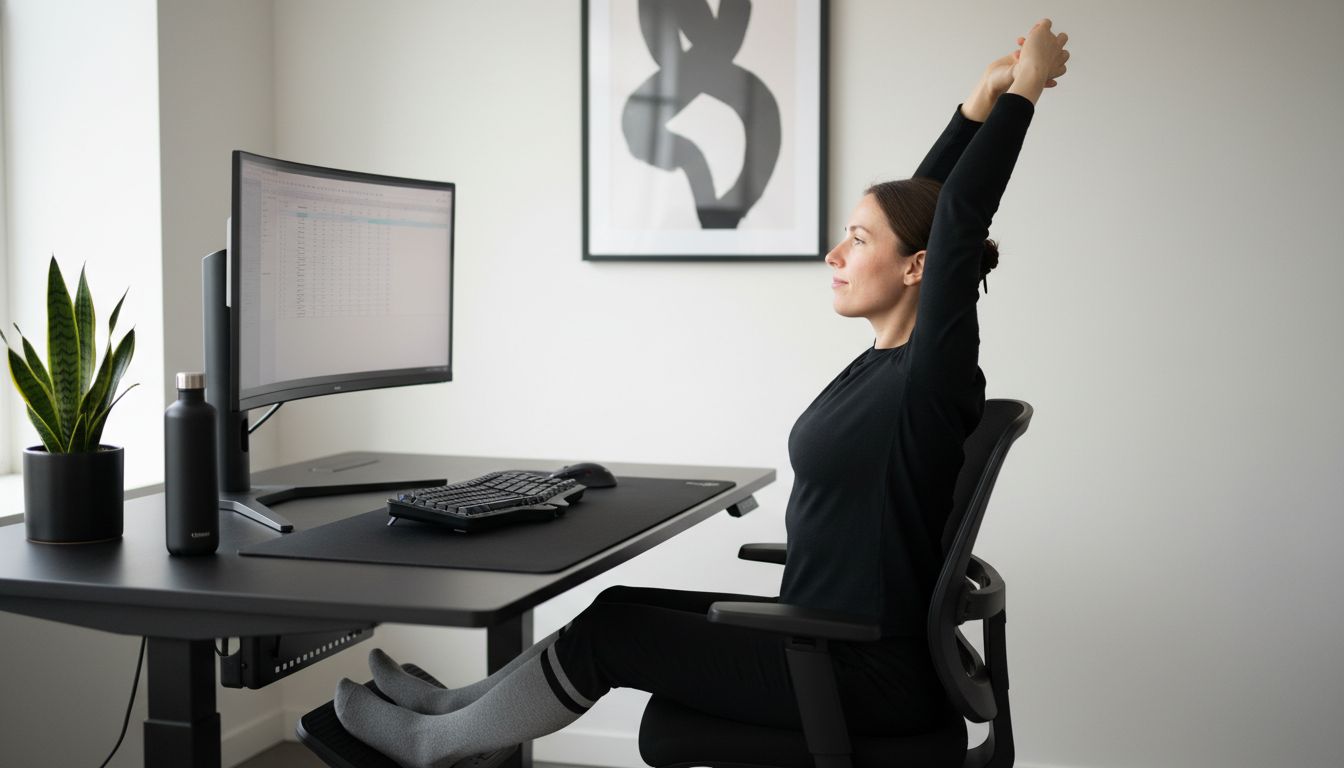
Ultimately, safe movement is about listening to your body and making intentional, small adjustments. Whether using best compression socks for standing jobs to support circulation or implementing micro-movement strategies, the goal is creating a workplace that prioritizes both productivity and physical well-being.
Compression Therapy’s Role for Office Workers
The modern office environment presents unique challenges for physical health, particularly for those spending long hours seated at desks. Compression therapy emerges as a critical intervention for office workers struggling with circulation, muscle fatigue, and potential long-term health risks associated with sedentary work patterns.
Key benefits of compression therapy for office workers include:
-
Circulation Enhancement
- Improves blood flow in stationary positions
- Reduces leg and ankle swelling
- Minimizes risk of blood clots
-
Muscle Support
- Provides targeted muscle stabilization
- Reduces muscle vibration and fatigue
- Supports proper leg alignment
-
Ergonomic Comfort
- Reduces leg and lower back strain
- Supports natural body mechanics
- Decreases workplace-related muscle tension
Understanding the nuanced needs of office workers, compression garments offer a proactive approach to managing physical strain. By applying graduated pressure, these therapeutic garments help counteract the negative impacts of prolonged sitting, supporting vascular health and preventing potential circulatory complications. For professionals seeking comprehensive support, understanding compression therapy for workplace wellness becomes an essential strategy for maintaining long-term health.
Ultimately, compression therapy transforms sedentary work environments from potential health risks to opportunities for proactive wellness. Whether you’re a desk-bound professional or a manager designing healthier workplace practices, integrating compression solutions represents a smart, scientifically-backed approach to maintaining physical well-being during extended work hours.
Common Mistakes and What to Avoid
Workplace physical activity initiatives often falter due to predictable yet avoidable errors. According to research from NCBI, many organizations struggle with implementing effective movement strategies due to fundamental misunderstandings about employee engagement and program design.
Critical Mistakes to Avoid:
-
Programmatic Errors
- Implementing one-size-fits-all approaches
- Neglecting individual employee capabilities
- Creating unsustainable or overly complex programs
-
Implementation Pitfalls
- Insufficient policy support
- Lack of consistent management commitment
- Ignoring employee feedback and preferences
-
Physical Activity Misconceptions
- Assuming intensity equals effectiveness
- Overlooking individual health variations
- Failing to provide scalable options
The CDC research emphasizes that successful workplace physical activity programs must be tailored to specific organizational cultures and employee needs. This means moving beyond generic recommendations and creating flexible, inclusive strategies that accommodate diverse physical capabilities and work environments.
Navigating these challenges requires a nuanced approach. For professionals seeking comprehensive guidance, compression socks for everyday use can provide additional support in managing workplace physical activity strategies. The key is creating an adaptable, supportive environment that recognizes individual differences while promoting collective wellness.
Enhance Your Workplace Wellness with Targeted Support
Employees facing long hours of sitting or standing know how challenging it can be to stay active without discomfort or fatigue. This article highlights the importance of integrating movement, practicing safe ergonomics, and the role of compression therapy in maintaining circulation and reducing muscle strain during the workday. If you struggle with swollen legs, tired muscles, or want to boost your physical comfort while staying productive, it is essential to address these specific pain points with proven solutions.
At Fit Stockings, we offer a trusted range of medical-grade compression stockings designed to support circulation and leg health for professionals like you. Our collection includes options tailored for various needs and compression levels, helping you prevent swelling and muscle fatigue while enhancing your overall wellness. Explore how our products complement the workplace strategies discussed by visiting Compression Therapy Guide and discover the Best Compression Socks for Standing Jobs. Don’t wait for discomfort to slow you down—start improving your workday comfort by shopping now at Fit Stockings and take the first step toward a healthier, more active you.
Frequently Asked Questions
What are the key components of a successful workplace physical activity program?
A successful workplace physical activity program should assess individual employee health profiles, analyze job-specific physical demands, identify potential sedentary work risks, create flexible movement opportunities, and develop targeted wellness interventions to fit the diverse needs of employees.
How can I incorporate movement into my workday without disrupting productivity?
You can incorporate movement into your workday by scheduling walking meetings, taking regular micro-breaks for stretching, using dynamic workstations that allow for both sitting and standing, and encouraging desk-based movements such as seated stretches or chair yoga.
What are the health benefits of staying active at work?
Staying active at work improves physical health by enhancing cardiovascular function and reducing the risk of chronic diseases. It also boosts mental wellness, leading to decreased stress levels, improved cognitive function, and higher emotional resilience, all of which contribute to increased productivity and reduced workplace fatigue.
How can compression therapy support office workers in maintaining health?
Compression therapy enhances circulation, reduces leg and ankle swelling, and provides muscle support. It helps minimize fatigue and supports proper leg alignment, making it a beneficial intervention for office workers, particularly those spending long hours at desks.
Recommended
- 7 Essential Exercises for Seniors to Stay Healthy – Fit Stockings
- Time Management for Caregivers: Complete Guide – Fit Stockings
- Walking for Pregnant Women: Enhance Circulation and Comfort – Fit Stockings
- Safe Pregnancy Workouts for Healthy Circulation and Comfort – Fit Stockings
- Work‑Life Balance: Complete Guide for Students & Young Pros – Optio Station: Best Project Management App for Prioritization