

Time Management for Caregivers: Complete Guide
Over 68 hours each week are spent by caregivers looking after others, often squeezing their own well-being into the margins. The constant shuffle between appointments, household needs, and personal commitments leaves little room to breathe. Effective time management transforms this chaos into a livable routine, helping caregivers not only meet daily demands but also reclaim space for their own health. Discover strategies that make each day more manageable while restoring a vital sense of balance.
Table of Contents
- Defining Time Management For Caregivers
- Common Time Challenges Faced By Caregivers
- Essential Planning And Scheduling Techniques
- Balancing Caregiving With Personal Health
- Tools And Resources For Caregiver Efficiency
Key Takeaways
| Point | Details |
|---|---|
| Strategic Time Management | Caregivers need to develop flexible systems for managing time that protect personal well-being while balancing care responsibilities. |
| Recognizing Emotional Burdens | Emotional stress and burnout are common for caregivers, necessitating effective stress management and boundaries. |
| Technology as a Resource | Utilizing digital tools such as shared calendars and telehealth can enhance efficiency and reduce caregiver stress. |
| Essential Self-Care | Prioritizing personal health through self-care strategies is vital for sustaining effective caregiving and personal wellness. |
Defining Time Management for Caregivers
Time management for caregivers is more than just scheduling tasks—it’s a strategic approach to balancing personal well-being with demanding care responsibilities. Time management involves consciously allocating your limited hours and energy to maximize effectiveness and minimize burnout, while maintaining your own physical and emotional health.
According to Wikipedia, time management fundamentally involves “planning and exercising conscious control over time spent on specific activities to increase effectiveness, efficiency, and productivity.” For caregivers, this means developing a nuanced approach that goes beyond simple to-do lists. It requires creating flexible systems that adapt to unpredictable caregiving scenarios while protecting personal boundaries.
Time allocation becomes critically important in caregiving. Wikipedia’s time-use research highlights that understanding how individuals distribute their daily hours provides crucial insights into managing multiple competing responsibilities. For caregivers, this translates into strategic planning that encompasses:
- Managing medical appointments and treatment schedules
- Handling personal and professional commitments
- Preserving personal self-care and emotional wellness
- Maintaining relationships outside of caregiving responsibilities
Successful time management isn’t about perfection—it’s about creating sustainable rhythms that support both the caregiver and the person receiving care. Recognizing that your time is a precious, finite resource allows you to make intentional choices that prevent overwhelm and promote resilience.
Common Time Challenges Faced by Caregivers
Caregivers encounter a unique set of time management challenges that can feel overwhelming and emotionally draining. Time scarcity becomes a critical issue as personal and professional responsibilities compete with increasingly complex caregiving demands.
Research from the ILP Network Journal reveals staggering insights into caregivers’ time burden. Caregivers are dedicating an average of 68 hours per week to care responsibilities, which leads to significant personal consequences:
- 62.3% experience heightened emotional stress
- 61.7% report negative impacts on work performance
- 62.0% observe declining personal physical health
According to a study published by Oxford Health Affairs Scholar, employed caregivers face particularly complex challenges. A striking 44% of working caregivers reported moderate to severe difficulties balancing paid employment with caregiving duties, with time management being the most frequently cited obstacle.
These challenges aren’t just statistical abstractions—they represent real human experiences of individuals stretched thin between nurturing others and maintaining their own well-being. The constant juggling of medical appointments, personal care tasks, work responsibilities, and emotional support creates a complex web of time management that requires strategic navigation and compassionate self-awareness.

Here’s a comparison of key time management challenges faced by caregivers and effective solutions to address them:
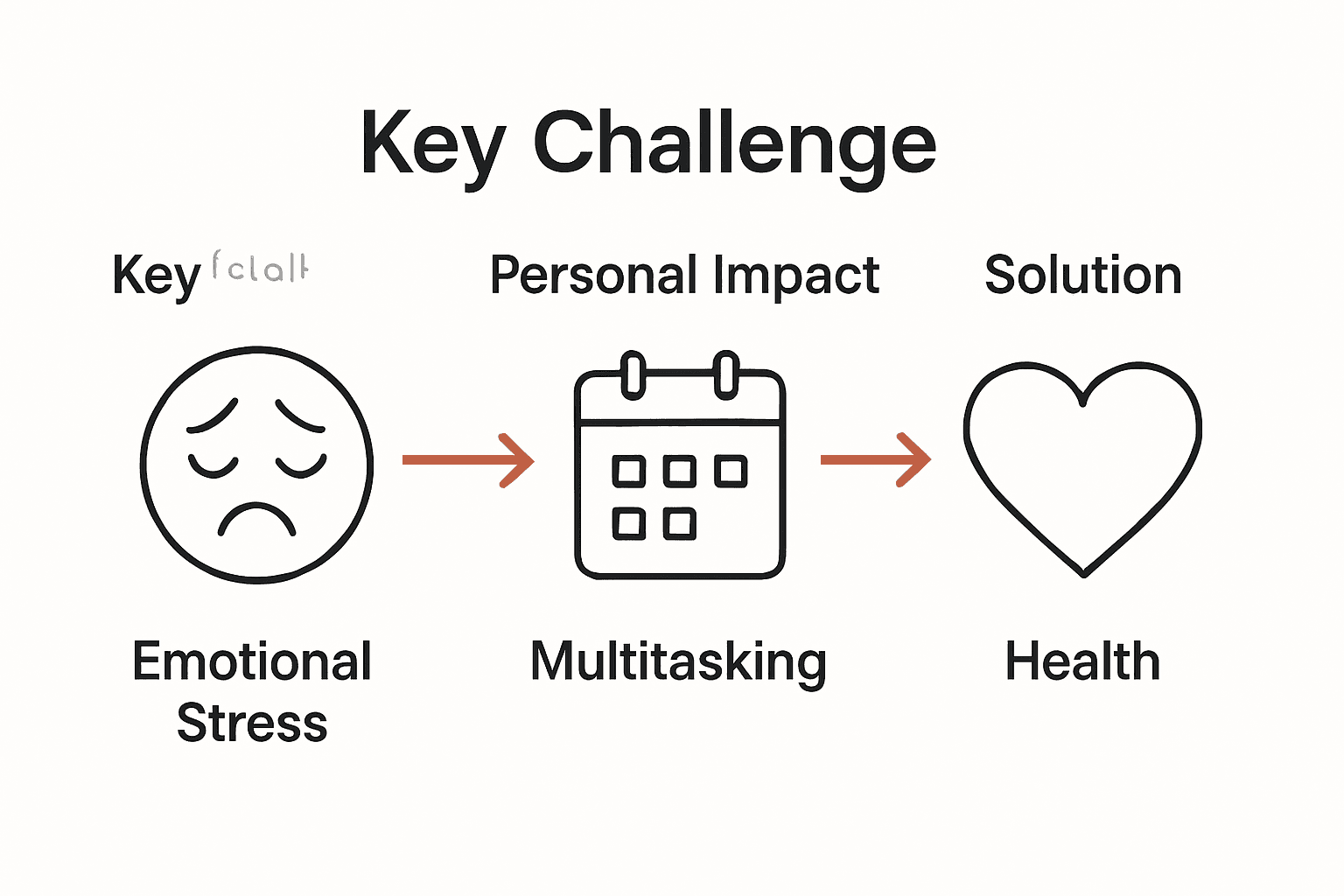
| Time Management Challenge | Impact on Caregivers | Practical Solutions |
|---|---|---|
| Emotional Stress | Heightened anxiety Burnout |
Stress management Seeking counseling |
| Work-Life Balance | Poor job performance Absenteeism |
Flexible routines Task prioritization |
| Managing Multiple Tasks | Overwhelm Missed appointments |
Visual schedules Shared calendars |
| Declining Personal Health | Fatigue Physical strain |
Self-care practices Regular breaks |
| Unpredictable Care Needs | Disrupted plans Resentment |
Adaptable planning Support networks |
Essential Planning and Scheduling Techniques
Effective time management for caregivers requires more than good intentions—it demands strategic planning and practical techniques that transform overwhelming responsibilities into manageable routines. The key is developing a system that provides structure while remaining flexible enough to adapt to unexpected challenges.
According to the National Center for Caregiving and Development Protocols, establishing a manageable routine is crucial. This involves writing out a weekly schedule and setting daily reminders to help balance responsibilities and reduce stress. Creating a visual roadmap of your commitments can transform chaotic caregiving into a more predictable and controlled experience.
Research from ArXiv suggests an innovative approach to scheduling: task-splitting. This technique can help caregivers optimize their time by breaking down complex responsibilities into more manageable segments. By strategically routing and scheduling tasks, caregivers can:
- Reduce operational stress
- Spend more time on high-priority activities
- Align tasks with personal qualifications
- Create more efficient care delivery
Successful scheduling isn’t about perfection—it’s about creating a dynamic system that evolves with your changing caregiving landscape. By implementing these techniques, you transform time management from a source of anxiety into a powerful tool for maintaining personal well-being and providing exceptional care.
Balancing Caregiving With Personal Health
Caregiving is a profound act of love that demands extraordinary emotional and physical resilience. Personal health isn’t a luxury for caregivers—it’s an absolute necessity for sustainable care delivery. Recognizing the intricate balance between supporting others and maintaining your own well-being is crucial to long-term caregiving success.
Research from the Social Work Institute highlights the significant emotional challenges caregivers face. They often experience complex emotions like guilt, frustration, and burnout, underscoring the critical importance of intentional self-care strategies. These emotional challenges can quickly erode personal health if not proactively addressed.
Specifically for family caregivers of individuals with chronic conditions, ArXiv research reveals the profound mental health impacts of long-term caregiving responsibilities. The study emphasizes the need for robust support systems that can adapt to the evolving mental wellness needs of caregivers. Key strategies for maintaining personal health include:
- Setting clear emotional boundaries
- Practicing regular stress management techniques
- Seeking professional counseling when needed
- Developing a strong support network
- Prioritizing personal physical and mental recovery
Balancing caregiving with personal health requires a holistic approach. Learn more about managing your well-being with our tips for medication management. By investing in yourself, you become a more effective, compassionate caregiver who can provide exceptional support without sacrificing your own wellness.
Tools and Resources for Caregiver Efficiency
In the complex world of caregiving, having the right technological support can transform overwhelming responsibilities into manageable tasks. Modern tools and resources offer caregivers unprecedented opportunities to streamline their daily routines, reduce stress, and maintain personal well-being.
According to the National Center for Caregiving and Development Protocols, strategic use of technology can significantly improve caregiver management. Recommended approaches include utilizing shared calendars, setting daily reminders, and intentionally planning short breaks. These simple digital interventions can create structure and predictability in an often unpredictable caregiving landscape.
Cutting-edge research from ArXiv highlights an exciting frontier in caregiver support: AI chatbots like Carey. These innovative technologies provide on-demand informational and emotional support, offering personalized solutions that can help caregivers navigate complex challenges. Key technological resources for caregivers include:
- Digital shared calendars and scheduling apps
- Medication tracking and reminder systems
- Telehealth consultation platforms
- AI-powered emotional support chatbots
- Online caregiver support communities
Learn more about managing your health journey with our walking guide for pregnant women, which offers insights into holistic self-care strategies. By embracing these tools, caregivers can create more efficient, compassionate care environments that support both their loved ones and themselves.
Support Your Caregiving Journey with Essential Daily Comfort
Caregivers face relentless demands that test their endurance and well-being. As the article highlights, managing time while preserving your personal health is a daily challenge filled with emotional stress and physical strain. One key to sustaining your resilience is prioritizing self-care tools that help reduce fatigue and improve circulation during long caregiving hours.
At Fit Stockings, we understand the critical need for comfort and recovery. Our medical-grade compression stockings offer targeted relief for common issues like leg swelling, varicose veins, and circulation problems that many caregivers experience. Designed to fit your lifestyle, our selections include a variety of styles and compression levels so you can find the perfect support to keep you active and pain-free.
Take control of your caregiving days by adding therapeutic comfort to your routine today. Explore our collection and discover how proper compression can enhance your endurance and overall well-being at Fit Stockings. Support yourself as you support others and experience the difference now.
Frequently Asked Questions
What are the key time management challenges faced by caregivers?
Caregivers often face challenges such as emotional stress, difficulties in achieving work-life balance, managing multiple tasks, declining personal health, and unpredictable care needs. These challenges can lead to overwhelm and burnout if not effectively managed.
What are some effective planning techniques for caregivers?
Effective planning techniques for caregivers include creating a weekly schedule, setting daily reminders, using visual aids like calendars, and employing task-splitting methods to break down complex responsibilities into manageable segments.
How can caregivers balance their own health with caregiving responsibilities?
Caregivers can balance their health by setting clear emotional boundaries, practicing regular stress management techniques, seeking professional counseling, developing a strong support network, and prioritizing personal recovery and self-care practices.
What technological tools can assist caregivers in managing their tasks?
Technological tools that can assist caregivers include shared calendars, medication tracking apps, telehealth platforms, AI chatbots for emotional support, and online caregiver support communities. These resources can streamline responsibilities and reduce stress.
Recommended
- Complete Guide to Tips for Medication Management – Fit Stockings
- Journaling for Stress Relief: Boost Calm and Recovery Fast – Fit Stockings
- Understanding Stress Relief During Pregnancy – Fit Stockings
- Breathing Exercises for Stress: Step-by-Step Relief Guide – Fit Stockings
- Understanding Time Management for Young Professionals – Optio Station: Best Project Management App for Prioritization