

How to Avoid Burnout Naturally: A Complete Step-by-Step Guide
Nearly 60 percent of working adults report feeling symptoms of burnout at some point in their careers. This growing issue affects not just your productivity, but also your long-term mental and physical health. Understanding what puts you at risk and learning the right prevention steps can help you safeguard your wellbeing and stay resilient through daily demands.
Table of Contents
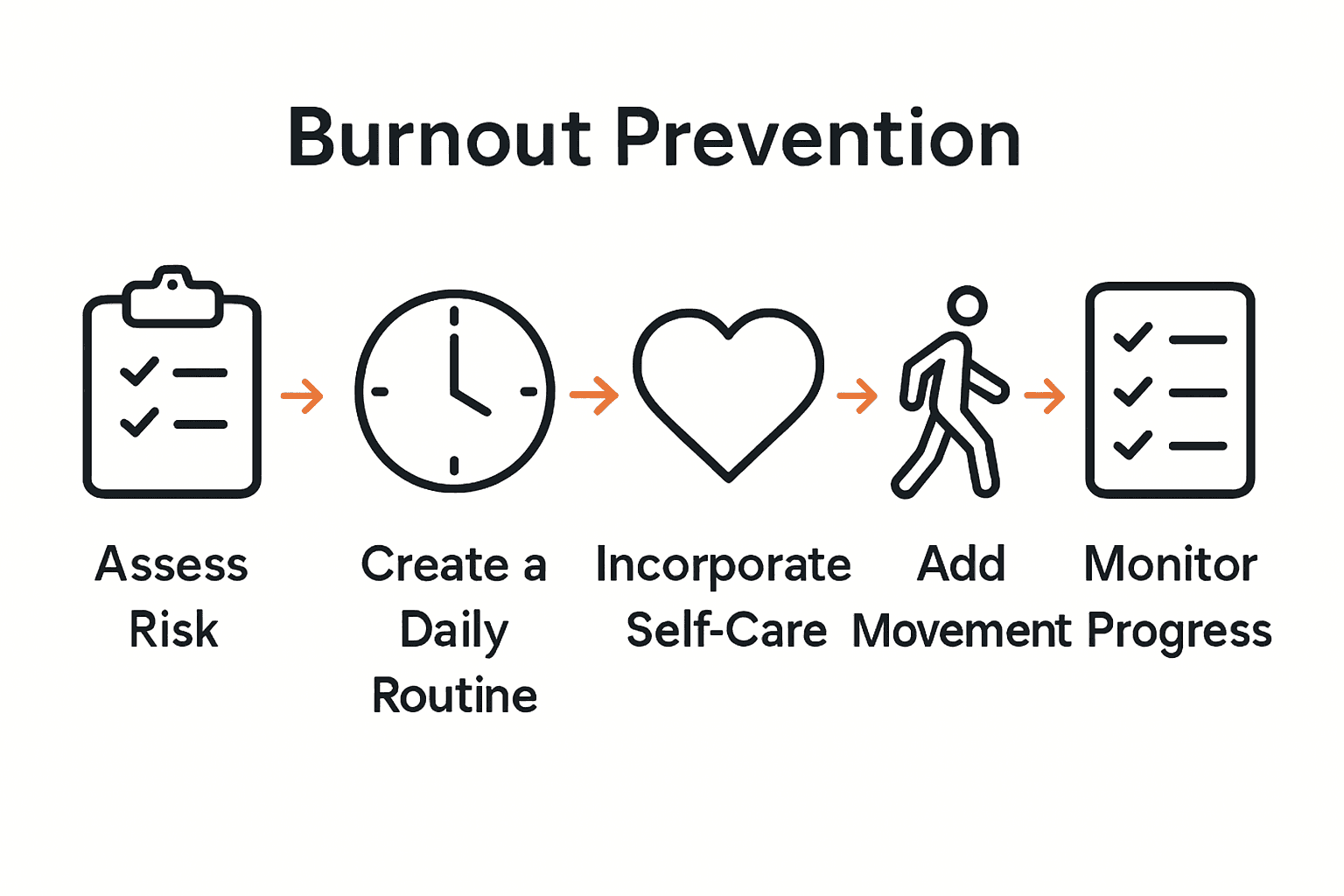
- Step 1: Assess Your Personal Risk Factors
- Step 2: Design A Supportive Daily Routine
- Step 3: Incorporate Restorative Self-Care Practices
- Step 4: Implement Movement And Circulation Strategies
- Step 5: Monitor Your Progress And Adjust Habits
Quick Summary
| Key Point | Explanation |
|---|---|
| 1. Assess your personal risk factors | Identify workload, support, and stress management strengths to gauge burnout risk effectively. |
| 2. Create a balanced daily routine | Structure your day with sleep, breaks, and self-care to protect against burnout. |
| 3. Integrate self-care practices | Prioritize exercise, mindfulness, and social connections as essential elements of wellness. |
| 4. Adopt movement strategies | Include regular movement throughout your day to combat physical and mental stagnation. |
| 5. Track your progress regularly | Use assessments to identify patterns, enabling proactive adjustments in your wellness approach. |
Step 1: Assess your personal risk factors
Understanding your personal burnout risk is the first critical step toward preventing its onset and protecting your mental and physical wellbeing. By systematically evaluating specific factors that contribute to potential burnout, you can develop targeted strategies to mitigate potential risks.
According to research from PubMed, certain demographic characteristics can significantly influence burnout susceptibility. Male students pursuing specific academic programs, for instance, demonstrate higher vulnerability to academic burnout syndrome. This suggests that your professional field, gender, and educational context play substantial roles in determining burnout potential.
To effectively assess your personal risk factors, consider conducting a comprehensive self evaluation across multiple domains:
- Professional workload and emotional demands
- Quality of workplace social support
- Personal stress management capabilities
- Work life balance
- Sleep and recovery patterns
- Emotional resilience and coping mechanisms
Research from EJournals highlights that quantitative job demands and perceived social support from supervisors are critical predictors of professional burnout. This means examining not just how much work you do, but also the quality of interpersonal relationships and support systems in your professional environment.
Warning: Self assessment requires honest introspection. Avoid minimizing or rationalizing potential risk indicators. Your mental health deserves genuine, objective evaluation.
By understanding your unique risk profile, you are already taking the first proactive step toward preventing burnout and maintaining your overall wellness.
 The next section will help you translate these insights into concrete protective strategies.
Step 2: Design a supportive daily routine
Creating a structured daily routine is crucial in preventing burnout and maintaining optimal mental and physical wellness. Your routine should serve as a personalized blueprint that balances professional responsibilities with essential self care practices.
Research from Wikipedia highlights the Job Demands-Resources model, which suggests that effectively designing your daily schedule involves strategically balancing job demands with adequate personal resources. This means thoughtfully integrating breaks, recovery periods, and stress management techniques into your everyday workflow.
Key elements of a burnout-preventing daily routine include:
- Consistent sleep schedule with 7-9 hours of quality rest
- Morning mindfulness or meditation practice
- Structured work intervals with regular short breaks
- Physical movement or exercise
- Dedicated time for personal relaxation
- Clear boundaries between work and personal life
The concept of Booster Breaks provides an excellent framework for integrating strategic pauses into your workday. These organized breaks are designed to improve both physical and psychological health while potentially increasing overall work productivity.
When designing your routine, remember that flexibility is key. Your supportive daily structure should adapt to your unique needs and lifestyle, not become another source of stress.
By implementing a thoughtful, personalized daily routine, you are proactively protecting yourself against burnout.
In the next section, we will explore specific stress management techniques to further enhance your resilience.
Step 3: Incorporate restorative self-care practices
Restoring your mental and physical energy requires intentional self-care practices that go beyond simple relaxation. This step focuses on developing a comprehensive approach to nurturing your overall wellbeing and building psychological resilience.
Research on the Scale of Protective Factors reveals that effective self-care involves strategic improvements in social relationships, planning behaviors, and personal confidence. These protective factors serve as critical buffers against stress and potential burnout.
Key restorative self-care practices include:
- Regular physical exercise
- Mindfulness and meditation techniques
- Quality sleep hygiene
- Nutritious diet and hydration
- Social connection and support networks
- Creative and recreational activities
- Professional counseling or therapy
The Well-Being Index offers an excellent online self-assessment tool that can help you monitor your mental health and track the effectiveness of your self-care strategies. By regularly evaluating your psychological state, you can make informed adjustments to your wellness approach.
Warning: Self-care is not a luxury. It is a fundamental necessity for maintaining your mental and physical health. Treat these practices as non-negotiable investments in your personal wellbeing.
By systematically incorporating these restorative practices, you create a robust defense against burnout. The next section will explore advanced stress management techniques to further fortify your resilience.
Step 4: Implement movement and circulation strategies
Addressing physical stagnation is crucial in preventing burnout and maintaining overall wellness. This step focuses on integrating strategic movement and circulation techniques that can dramatically improve your mental and physical resilience.
Research on Booster Breaks reveals the significant impact of brief movement sequences during the workday. These short intervals of stretching and toning can substantially improve both physical and psychological health, serving as a powerful antidote to workplace sedentary patterns.
Effective movement and circulation strategies include:
- Hourly standing or walking breaks
- Desk stretching routines
- Active commuting options
- Micro exercise intervals
- Dynamic sitting techniques
- Leg circulation exercises
- Posture improvement movements
The Job Demands-Resources model emphasizes balancing physical job demands with appropriate resources. Movement strategies act as critical resources that help counteract workplace stress and potential burnout.
Warning: Sedentary behavior is not just about physical health. Prolonged sitting can significantly impact mental energy, cognitive performance, and emotional resilience.
By systematically incorporating these circulation strategies, you create a dynamic approach to preventing burnout. The next section will explore advanced stress management techniques to complement these physical interventions.
For more detailed guidance, check out our guide on staying active at work.
Step 5: Monitor your progress and adjust habits
Tracking your burnout prevention journey requires consistent self-reflection and strategic adjustments. This critical step helps you understand your progress, identify potential challenges, and modify your approach proactively.
The Maslach Burnout Inventory provides a comprehensive psychological assessment tool that measures three key dimensions of burnout: emotional exhaustion, depersonalization, and personal accomplishment. By periodically evaluating these dimensions, you can gain deep insights into your mental and emotional state.
Effective monitoring and adjustment strategies include:
- Weekly self assessment journals
- Tracking emotional energy levels
- Documenting stress triggers
- Monitoring sleep quality
- Recording physical activity patterns
- Noting work satisfaction indicators
- Reviewing personal boundaries
The Well-Being Index offers another powerful approach by allowing individuals to reassess their well-being scores over time and access customized resources for improvement. This tool enables you to compare your results and develop targeted intervention strategies.
Warning: Monitoring is not about perfection. It is about understanding your patterns and making compassionate, incremental changes that support your overall wellness.
By developing a systematic approach to tracking your progress, you transform burnout prevention from a passive process into an active, empowering journey.
 The final section will help you consolidate these strategies into a sustainable long term wellness plan.
Support Your Burnout Prevention Journey with Targeted Circulation Care
Burnout often comes with physical symptoms like fatigue and poor circulation that can worsen feelings of exhaustion and stress. The article highlights the importance of movement and circulation strategies as part of a natural burnout prevention plan. If you struggle with leg swelling, discomfort, or circulation issues that make staying active harder, specialized compression stockings offer a practical way to boost your physical resilience and support your daily routine.
At Fit Stockings, you can find medical-grade compression stockings designed to improve blood flow, reduce leg fatigue, and enhance comfort during long work hours or recovery breaks. With a variety of gradients and styles, these products complement self-care practices by helping you move more comfortably and sustain your energy. Don’t wait until burnout symptoms intensify. Explore our selection and learn how therapeutic compression can be a vital part of your long-term wellness plan. Start protecting your wellbeing today at Fit Stockings and take the next important step in your burnout prevention journey.
Frequently Asked Questions
How can I assess my personal burnout risk factors?
Understanding your personal burnout risk involves evaluating factors like your workload, emotional demands, and quality of social support at work. Conduct a self-assessment by reflecting on these areas regularly to identify potential risks and vulnerabilities.
What daily routine can help me avoid burnout naturally?
To prevent burnout, design a supportive daily routine that includes consistent sleep, regular breaks, and time for relaxation. Aim to limit work hours to 8 hours per day and incorporate at least 30 minutes for mindfulness or physical activity.
What self-care practices are essential to prevent burnout?
Incorporate restorative self-care practices such as regular exercise, mindfulness meditation, and maintaining a healthy diet. Make self-care a priority by dedicating at least 1 hour daily to activities that rejuvenate you, like reading or socializing with friends.
How often should I monitor my progress in burnout prevention?
It’s essential to monitor your progress regularly, ideally on a weekly basis. Keep a self-assessment journal to track your emotional energy levels and stress triggers, adjusting your habits as necessary to address any emerging concerns.
What movement strategies can help me maintain energy throughout the day?
To avoid burnout, integrate movement into your daily routine by taking short, frequent breaks every hour to stretch or walk. Aim for at least 5 minutes of movement every hour to boost circulation and refresh your mind.
How can I effectively balance work with personal life to prevent burnout?
Establish clear boundaries between work and personal life by setting specific work hours and sticking to them. Make a plan to disconnect from work emails and tasks during weekends or after 6 PM to rejuvenate and focus on personal interests.