

Managing Work Stress: Complete Guide for Patients
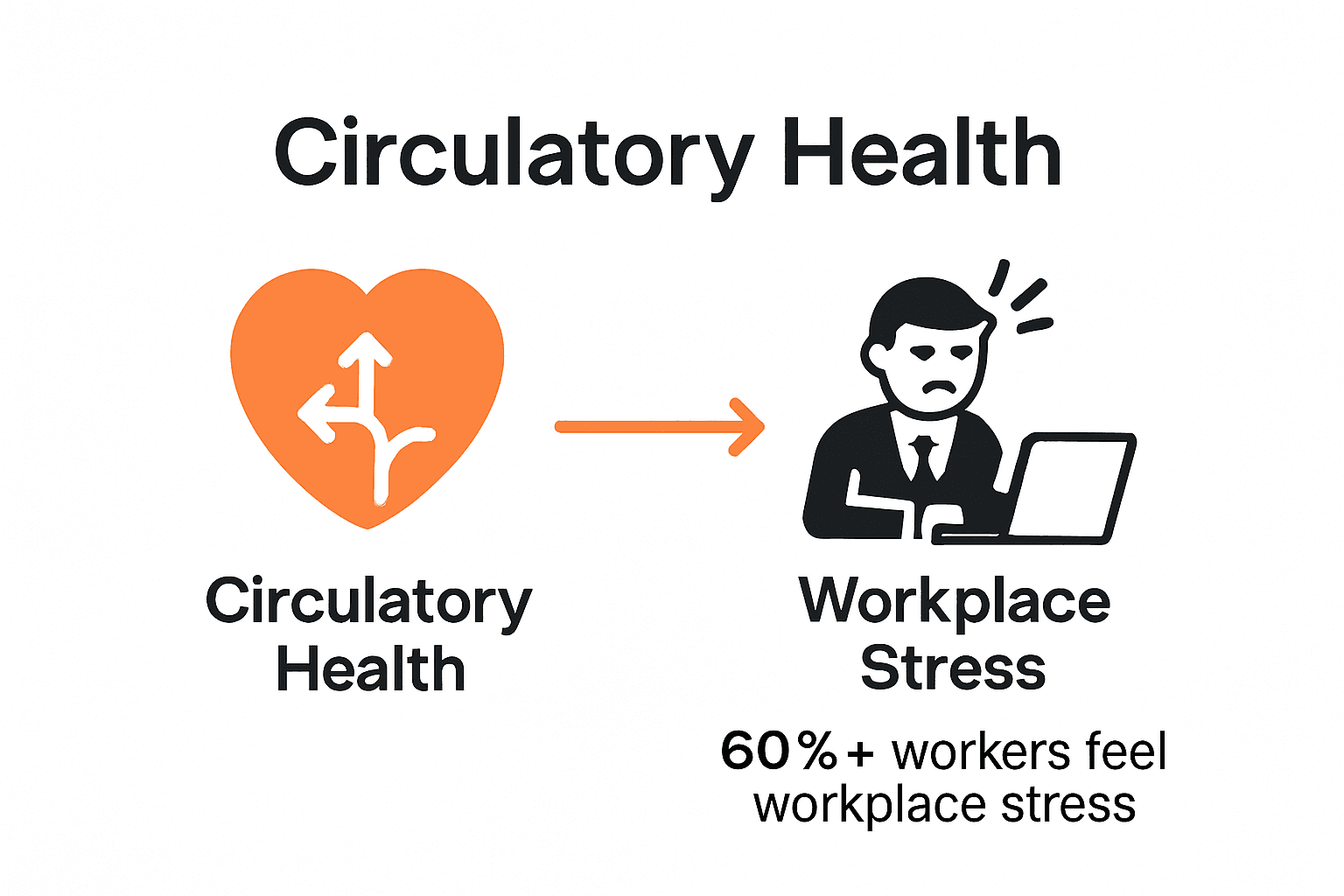
More than 60 percent of workers report feeling stressed at their jobs, yet myths about work stress still cloud the real picture. Work-related stress reaches far beyond occasional frustration, shaping our minds, bodies, and even long-term health. Understanding the true sources and impact of workplace stress opens up practical ways to take control, protect your health, and thrive in today’s demanding work environments.
Table of Contents
- Defining Work Stress And Common Misconceptions
- Major Types And Sources Of Work Stress
- Physical And Mental Impact On Circulatory Health
- Practical Techniques For Reducing Work Stress
- Workplace Rights And Seeking Support
- Risks Of Unmanaged Stress For Patients
Key Takeaways
| Point | Details |
|---|---|
| Understanding Work Stress | Work stress is a complex response involving both psychological and physiological elements, significantly impacting mental and physical health. |
| Misconceptions | Common myths include the belief that stress is purely mental or that high performers are immune to it, highlighting the need for systemic solutions. |
| Sources of Stress | Stress arises from job demands, financial uncertainties, family responsibilities, and organizational factors, necessitating targeted interventions. |
| Personalized Stress Management | Effective stress relief strategies must be individualized and can include mindfulness practices, structured breaks, and emotional regulation techniques. |
Defining Work Stress and Common Misconceptions
Work stress is a complex psychological and physiological response to challenging workplace conditions that extends far beyond simple daily frustrations. According to Wikipedia, job strain represents a specific form of psychosocial stress characterized by high workplace demands coupled with low personal control, which can significantly impact both psychological and physical health.
Contrary to popular misconceptions, work stress isn’t just about feeling temporarily overwhelmed. Psychosocial hazards are nuanced occupational risks that emerge from intricate workplace dynamics involving work design, organizational structures, and management approaches. These hazards can profoundly affect workers’ mental and emotional well-being, creating persistent challenges that go well beyond occasional workplace tension.
The most common misconceptions about work stress include:
- Believing stress is purely a mental issue with no physical consequences
- Thinking high-performing employees are immune to workplace stress
- Assuming stress is always a personal weakness rather than a systemic workplace problem
Recognizing work stress requires understanding its multifaceted nature. It’s not simply about individual resilience, but about creating supportive work environments that prioritize employee psychological safety. Understanding stress relief strategies can be crucial in developing holistic approaches to managing workplace pressures and maintaining overall well-being.
Major Types and Sources of Work Stress
According to the Job Demands-Resources model, work stress emerges from two primary categories: job demands and job resources. Job demands represent the physical, psychological, social, and organizational challenges that require significant employee effort and energy expenditure. These demands can range from heavy workloads and tight deadlines to complex interpersonal workplace dynamics.
Research from Statistics Canada reveals multiple interconnected sources of workplace stress beyond typical job responsibilities. Workers frequently experience stress from a complex web of factors, including:
- Work-related pressures
- Financial uncertainties
- Family responsibilities
- Time management challenges
- Personal life complications
Workplace stress isn’t a monolithic experience but a nuanced interaction between individual capacity and environmental challenges. Organizational factors play a critical role in stress generation, including management styles, communication patterns, role ambiguity, and workplace culture. Some employees might experience chronic stress from persistent misalignment between their skills and job expectations, while others struggle with unclear performance metrics or limited professional development opportunities.

Recognizing these diverse stress sources allows individuals and organizations to develop targeted intervention strategies.
VIDEO:video_content] [Understanding stress relief strategies becomes crucial in creating resilient, supportive work environments that acknowledge the multifaceted nature of workplace psychological well-being.
Physical and Mental Impact on Circulatory Health
According to research on Job Strain, workplace stress is not just a psychological phenomenon but a significant health risk with profound implications for cardiovascular functioning. The combination of high workplace demands and low personal control can trigger a cascade of physiological responses that directly impact circulatory health, potentially leading to serious long-term cardiovascular complications.
Psychosocial hazards in the workplace can manifest as complex physiological disruptions. As documented by Wikipedia, these workplace stressors can precipitate serious physical conditions, including:
- Cardiovascular disease
- Musculoskeletal injuries
- Chronic inflammation
- Compromised immune system responses
- Elevated blood pressure
The intricate connection between mental and circulatory health becomes evident through the body’s stress response. Chronic stress triggers the release of hormones like cortisol and adrenaline, which can cause persistent blood vessel constriction, increased heart rate, and reduced blood flow efficiency. These physiological changes not only strain the cardiovascular system but can also contribute to long-term health risks.
Understanding how to improve circulation naturally becomes crucial in mitigating the potential negative impacts of workplace stress. Implementing comprehensive stress management strategies that address both psychological well-being and physical health can help individuals protect their circulatory system and maintain overall wellness.
Practical Techniques for Reducing Work Stress
Research emphasizes the critical importance of personalized stress management strategies. According to a groundbreaking study from ArXiv, effective workplace stress interventions must be user-centered, considering individual and contextual factors that uniquely impact each person’s stress response. This approach recognizes that one-size-fits-all solutions are rarely effective in addressing complex psychological challenges.
Technology can play a surprising role in stress management. ArXiv research suggests that analyzing smartphone usage patterns can provide valuable insights into predicting and managing workplace stress. Practical techniques for reducing stress include:
- Implementing structured breaks
- Practicing mindfulness and meditation
- Establishing clear work-life boundaries
- Developing effective time management skills
- Utilizing digital tools for stress tracking
Emotional regulation and self-awareness are fundamental to managing workplace stress. Individuals can develop resilience by recognizing their stress triggers, practicing proactive coping mechanisms, and creating personalized stress management plans. This might involve techniques like deep breathing, cognitive reframing, and regular physical activity.
Breathing exercises for stress relief can be a powerful tool in your stress management arsenal. By incorporating targeted techniques and maintaining a holistic approach to well-being, you can transform your relationship with workplace stress and protect both your mental and physical health.
Workplace Rights and Seeking Support
Workplace harassment represents a serious psychosocial hazard that can significantly impact employee well-being. According to Wikipedia, workplace harassment involves belittling or threatening behaviors directed at workers, recognized internationally as a critical occupational health and safety concern. Understanding your rights becomes the first line of defense against such harmful workplace dynamics.
International occupational safety standards acknowledge psychosocial hazards as major challenges to worker protection. As documented by Wikipedia, these hazards extend beyond direct harassment and include complex workplace interactions that can compromise mental and emotional health. Employees have multiple avenues for seeking support:
- Documenting specific incidents of harassment or stress
- Consulting human resources departments
- Seeking guidance from employee assistance programs
- Connecting with workplace ombudsmen
- Exploring external legal and professional support networks
Navigating workplace challenges requires a strategic approach that balances personal well-being with professional responsibilities. Understanding the nuanced landscape of workplace rights means recognizing that support isn’t just about confronting negative behaviors, but also about creating positive, respectful work environments that prioritize employee mental health.
Staying active at work can be an empowering strategy for maintaining personal agency and resilience. By proactively understanding your rights, documenting experiences, and seeking appropriate support, you can transform potentially stressful workplace dynamics into opportunities for growth and positive change.
Risks of Unmanaged Stress for Patients
According to research on Job Strain, unmanaged workplace stress can lead to profound and potentially devastating health consequences. Chronic stress transforms from a temporary psychological state into a complex physiological condition that systematically undermines multiple body systems, creating cascading health risks that extend far beyond momentary workplace tensions.
Psychosocial hazards present significant long-term health dangers. As documented by Wikipedia, prolonged exposure to unmanaged workplace stress can precipitate serious medical conditions, including:
- Cardiovascular disease
- Clinical depression
- Compromised immune system functioning
- Persistent musculoskeletal disorders
- Neurological and metabolic disruptions
- Elevated blood pressure
- Increased risk of metabolic syndrome
The human body responds to continuous stress through complex neurochemical and physiological adaptations that can fundamentally alter health trajectories. Prolonged stress triggers chronic inflammation, disrupts hormonal balance, and creates a persistent state of physiological hyperarousal that gradually erodes both mental and physical resilience. These systemic changes can transform temporary workplace challenges into serious, potentially life-altering health conditions.
Journaling for stress relief represents one strategic approach to interrupting stress cycles and creating personal accountability. By understanding these risks, patients can take proactive steps to protect their health, transforming potentially harmful stress responses into opportunities for personal growth and well-being.
Support Your Circulatory Health While Managing Work Stress
Managing work stress means more than just calming your mind. It also involves protecting your circulatory system from the harmful effects of chronic stress. As the article explains, workplace pressures and psychosocial hazards can increase risks like high blood pressure and reduced blood flow. That is why incorporating medical-grade compression therapy can be a vital part of your stress management routine. Compression stockings help improve circulation, reduce swelling, and support overall vascular health, allowing you to feel better physically while coping with emotional strain.
Take control of your well-being today by exploring our carefully selected range of compression stockings designed for comfort and therapeutic benefits. Don’t wait until stress-related circulatory issues develop. Visit Fit Stockings now to find the perfect fit for your needs. Your legs and heart will thank you as you navigate work stress with enhanced physical support.
Frequently Asked Questions
What are the signs of work stress?
Work stress can manifest in various ways, including feelings of overwhelm, anxiety, physical symptoms like headaches or fatigue, and persistent difficulty in managing tasks. It may also affect interpersonal relationships and productivity.
How can I manage work stress effectively?
Effective management of work stress includes implementing personalized strategies such as taking structured breaks, practicing mindfulness, setting clear work-life boundaries, and engaging in physical activities. Utilizing digital tools to track stress can also help.
What are the long-term health risks associated with unmanaged work stress?
Unmanaged work stress can lead to serious health conditions, such as cardiovascular disease, clinical depression, compromised immune system functioning, and persistent musculoskeletal disorders. Chronic stress can disrupt hormonal balance and lead to metabolic issues.
What role do psychosocial hazards play in workplace stress?
Psychosocial hazards are workplace factors that negatively affect mental and emotional well-being. These include poor management styles, role ambiguity, and lack of support, all of which can contribute to increased levels of work stress for employees.