

Understanding Reasons for Swollen Ankles and Their Impact
Swollen ankles are more than just a nuisance. Up to 20 percent of adults experience occasional or chronic swelling in their feet and ankles, often without knowing the real cause. Most people assume standing too long or a salty meal is to blame. Surprisingly, those puffy ankles could actually reveal what is happening deep inside your heart, kidneys, or circulatory system.
Table of Contents
- What Causes Swollen Ankles? A Basic Explanation
- The Importance Of Identifying Swollen Ankles
- How Body Mechanics Contribute To Swollen Ankles
- Common Medical Conditions Related To Swollen Ankles
- Lifestyle Factors And Their Role In Swollen Ankles
Quick Summary
| Takeaway | Explanation |
|---|---|
| Recognize symptoms of swollen ankles. | Swollen ankles indicate possible underlying health issues that require attention. |
| Evaluate lifestyle factors affecting swelling. | High sodium intake and sedentary behavior can increase the risk of ankle edema. |
| Consult healthcare professionals if swelling persists. | Persistent swelling may signal serious conditions, including heart or kidney diseases that need medical evaluation. |
| Monitor posture and physical activity. | Poor posture and lack of movement can contribute to fluid accumulation in the ankles. |
| Stay hydrated and limit salt intake. | Proper hydration and a balanced diet can help manage fluid retention and swelling. |
What Causes Swollen Ankles? A Basic Explanation
Swollen ankles represent a common medical condition where fluid accumulates in the soft tissue surrounding the ankle joint, causing noticeable enlargement and potential discomfort. Understanding the underlying reasons for swollen ankles helps individuals recognize potential health signals and seek appropriate medical attention.
Physiological Mechanisms Behind Ankle Swelling
Ankle swelling occurs when excess fluid builds up in the lower extremities, a process medically termed edema. This fluid retention can result from various physiological disruptions in the body’s normal circulatory and inflammatory responses.
Research from Mayo Clinic suggests that multiple factors can trigger this fluid accumulation, ranging from minor lifestyle issues to significant health conditions.
The primary mechanisms contributing to ankle swelling include:
- Compromised venous circulation
- Impaired lymphatic drainage
- Hormonal fluctuations
- Inflammatory responses
Common Triggers for Ankle Swelling
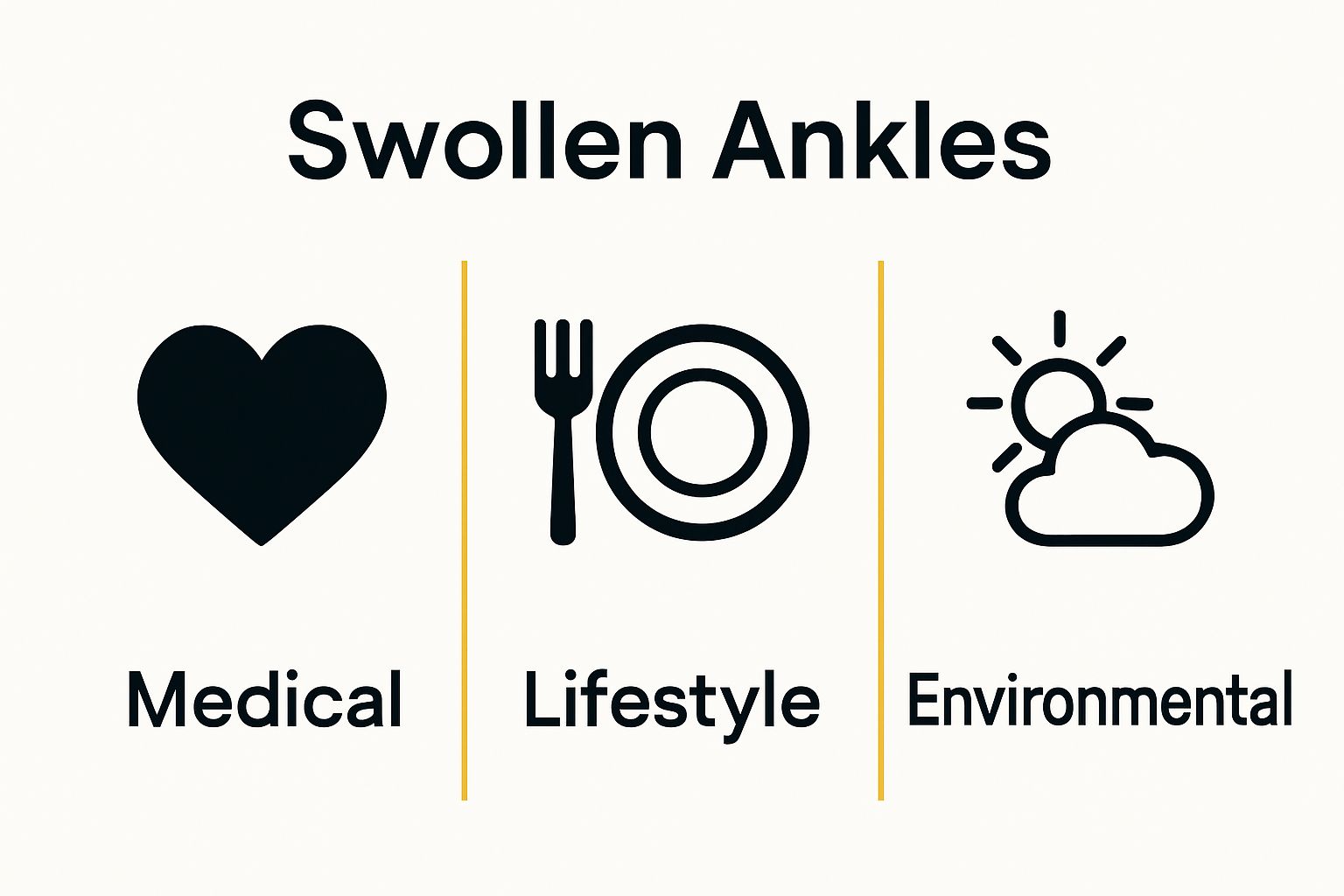
Some frequent reasons for swollen ankles encompass both benign and serious health conditions. Lifestyle factors like prolonged standing, sedentary behavior, and high sodium intake can contribute to fluid retention. Specific medical conditions such as heart disease, kidney disorders, and hormonal imbalances may also trigger significant ankle swelling.
For individuals experiencing persistent ankle swelling, our guide on understanding leg swelling at night provides additional insights into potential underlying causes and management strategies. Understanding these triggers helps individuals make informed decisions about their health and seek timely medical consultation when necessary.
The Importance of Identifying Swollen Ankles
Identifying swollen ankles is more than a routine health observation. It represents a critical diagnostic signal that can reveal underlying health conditions and potential systemic issues before they become severe medical complications.
Early Warning Signs and Health Implications
Swollen ankles function as an essential bodily indicator, signaling potential problems within the cardiovascular, circulatory, and metabolic systems. Research from the National Institutes of Health indicates that persistent ankle swelling could be an early warning sign of serious medical conditions that require prompt professional evaluation.
Key health conditions potentially signaled by ankle swelling include:
- Heart failure
- Kidney disease
- Liver disorders
- Venous insufficiency
- Lymphatic system complications
Comprehensive Health Assessment
Proper recognition and documentation of ankle swelling provides healthcare professionals critical insights into an individual’s overall physiological functioning. Tracking the frequency, duration, and accompanying symptoms becomes crucial for accurate diagnosis. Learn more about managing leg swelling with our comprehensive guide which offers detailed strategies for understanding and addressing potential underlying health concerns.
Timely identification enables medical practitioners to conduct targeted diagnostic tests, assess potential risks, and develop appropriate treatment strategies. By understanding the nuanced signals presented through ankle swelling, individuals can take proactive steps toward maintaining their overall health and preventing potential long term medical complications.
How Body Mechanics Contribute to Swollen Ankles
Body mechanics play a crucial role in understanding and managing ankle swelling, revealing how physical positioning, muscular dynamics, and gravitational forces interact to influence fluid distribution in the lower extremities.
Gravitational Influence and Fluid Dynamics
Research from the National Institutes of Health demonstrates that human anatomy is significantly impacted by gravitational pull, particularly in the lower limbs. Prolonged standing or sitting disrupts the body’s natural fluid circulation mechanisms, causing blood and lymphatic fluid to pool in the ankle and foot regions.
Key mechanical factors contributing to ankle swelling include:
- Reduced muscle pump action
- Compromised venous return
- Inefficient lymphatic drainage
- Decreased blood circulation
- Gravitational pressure on lower extremities
Muscular and Postural Mechanisms
The human musculoskeletal system relies on active muscle contractions to facilitate efficient blood and lymphatic fluid movement. When muscles remain inactive or experience limited movement, fluid accumulation becomes more likely. Discover effective strategies for managing leg swelling to understand how targeted interventions can improve circulation and reduce potential complications.
Complex interactions between muscle strength, joint flexibility, and overall body alignment significantly influence fluid dynamics. Weak calf muscles and poor postural habits can impede the natural pumping mechanism that helps return blood from the lower extremities to the heart, ultimately contributing to ankle swelling and potential long term circulatory challenges.
Common Medical Conditions Related to Swollen Ankles
Ankle swelling can be a symptomatic manifestation of numerous underlying medical conditions, ranging from cardiovascular disorders to metabolic and systemic health challenges. Understanding these potential connections helps individuals recognize when ankle swelling might signal a more serious health concern.
Cardiovascular and Circulatory Disorders
Research from the American Heart Association indicates that ankle swelling frequently represents a critical indicator of cardiovascular complications. Heart failure, venous insufficiency, and peripheral artery disease can significantly disrupt normal blood circulation, causing fluid accumulation in the lower extremities.
Key cardiovascular conditions associated with ankle swelling include:
- Congestive heart failure
- Chronic venous insufficiency
- Deep vein thrombosis
- Peripheral artery disease
- Hypertensive heart disease
Metabolic and Systemic Health Conditions
Beyond cardiovascular issues, ankle swelling can emerge from various metabolic and systemic health challenges. Kidney disorders, liver disease, and endocrine imbalances fundamentally alter the body’s fluid regulation mechanisms. Learn more about managing heat-related leg swelling to understand how environmental and physiological factors intersect with fluid retention.
Additional medical conditions potentially manifesting through ankle swelling encompass hormonal changes during pregnancy, lymphatic system disorders, and chronic inflammatory responses. Persistent ankle swelling should always prompt professional medical evaluation to determine the precise underlying cause and develop an appropriate treatment strategy.
Below is a table categorizing the major medical conditions associated with swollen ankles and summarizing how each condition contributes to the symptom.
| Medical Condition | How It Contributes to Ankle Swelling |
|---|---|
| Congestive heart failure | Causes fluid buildup due to reduced heart pumping |
| Chronic venous insufficiency | Poor vein function slows blood return, causing edema |
| Deep vein thrombosis | Clot blocks blood flow, leading to acute swelling |
| Peripheral artery disease | Restricted blood flow promotes fluid retention |
| Hypertensive heart disease | High blood pressure stresses blood vessels |
| Kidney disease | Impaired filtering leads to excess fluid retention |
| Liver disorders | Disrupted protein production causes fluid leakage |
| Lymphatic system complications | Blocked lymph flow results in localized swelling |
| Hormonal changes (pregnancy, etc.) | Alters fluid balance and vessel permeability |
Lifestyle Factors and Their Role in Swollen Ankles
Lifestyle choices play a profound role in determining ankle health and fluid dynamics, with daily habits significantly influencing the likelihood of developing swollen ankles. Understanding these interconnections empowers individuals to make proactive health decisions.
Dietary and Nutritional Influences
Research from the National Health Service highlights that dietary habits directly impact fluid retention and ankle swelling. High sodium consumption emerges as a critical factor, causing the body to retain water and increasing pressure on blood vessels and surrounding tissues.
Key nutritional factors contributing to ankle swelling include:
- Excessive salt intake
- Insufficient protein consumption
- Inadequate hydration
- High processed food consumption
- Limited potassium intake
Physical Activity and Mobility Patterns
Sedentary lifestyles and prolonged periods of immobility significantly contribute to ankle swelling. Lack of regular movement impairs the body’s natural fluid circulation mechanisms, causing blood and lymphatic fluid to pool in lower extremities. Discover comprehensive strategies for improving leg circulation to understand how targeted physical interventions can mitigate swelling risks.
Complex interactions between body weight, muscle strength, and movement patterns determine an individual’s susceptibility to ankle edema. Regular exercise, maintaining a healthy body weight, and incorporating periodic movement breaks can substantially reduce the risk of developing chronic ankle swelling and associated health complications.
The table below summarizes key lifestyle factors mentioned in the article that influence ankle swelling, along with their specific effects on fluid retention and edema.
| Lifestyle Factor | Impact on Ankle Swelling |
|---|---|
| High sodium intake | Promotes fluid retention and increases ankle swelling |
| Insufficient protein | Can lead to lowered blood osmotic pressure and edema |
| Inadequate hydration | May increase risk of fluid imbalance |
| Sedentary lifestyle | Reduces muscle pump action, causing fluid accumulation |
| Prolonged standing | Enhances gravitational pooling of blood and lymph |
| High processed foods | Often high in sodium, worsening fluid retention |
| Limited potassium | Can affect electrolyte balance and fluid regulation |

Take Steps Toward Healthy Ankles and Lasting Relief
Struggling with swollen ankles or facing daily discomfort from poor circulation can be overwhelming. The article highlights how fluid retention, long hours standing or sitting, and conditions like venous insufficiency and lymphedema contribute to persistent swelling. When these issues start to interfere with your life or signal something more serious, you need solutions that deliver real support and peace of mind.
Now is the perfect time to take control of your health. At Fit Stockings, you will find a wide choice of medical-grade compression stockings designed specifically to address leg swelling and boost healthy blood flow. Our curated range from brands like Jobst provides various compression gradients and styles, ideal if you are managing chronic edema, varicose veins, diabetes-related circulation concerns, or pregnancy symptoms. If you want to learn more ways to manage your condition, check our advice on improving leg circulation or explore guide to preventing venous ulcers. Do not wait for your swelling to get worse. Visit Fit Stockings now to find your perfect support and feel the difference in your daily comfort.
Frequently Asked Questions
What causes swollen ankles?
Swollen ankles are primarily caused by fluid accumulation in the soft tissue surrounding the ankle joint, a condition known as edema. This can result from various factors, including compromised venous circulation, impaired lymphatic drainage, hormonal fluctuations, and inflammation.
How can lifestyle factors contribute to swollen ankles?
Lifestyle factors such as prolonged standing, a sedentary lifestyle, high sodium intake, and insufficient hydration can significantly contribute to fluid retention and ankle swelling. Maintaining regular physical activity and a balanced diet can help mitigate these risks.
When should I seek medical attention for swollen ankles?
You should seek medical attention for swollen ankles if the swelling is persistent, accompanied by pain, shortness of breath, or other concerning symptoms. Early evaluation is important, as swollen ankles may indicate underlying health conditions such as heart failure, kidney disease, or liver disorders.
How does body mechanics affect the swelling in ankles?
Body mechanics play a crucial role in ankle swelling, as prolonged sitting or standing can disrupt normal fluid circulation. Reduced muscle activity and gravitational pressure can lead to pooling of blood and lymph fluid in the lower extremities, increasing the likelihood of swelling.